
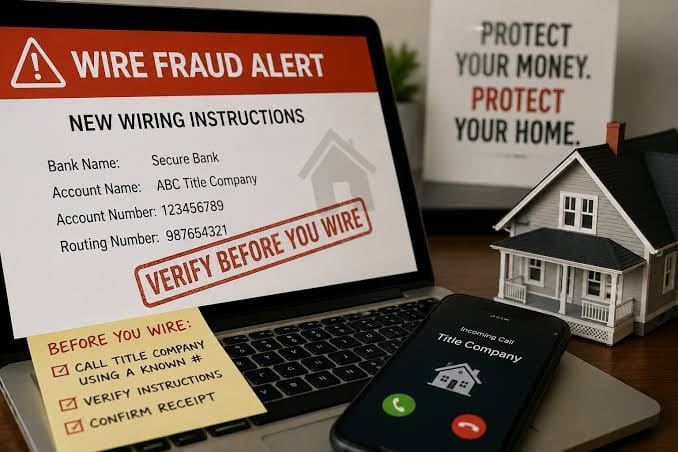
A closing email can contain the correct property address, familiar names, and a convincing explanation for sending money immediately—and still direct your savings to a criminal. Verifying closing wire instructions matters because appearances cannot establish who controls the receiving account. Before sending funds, build a confirmation process that works even when the message looks authentic.
Include payment arrangements in your broader home purchase planning. Establish who will receive the funds, how instructions will arrive, and how you will independently confirm them before closing pressure makes every request feel urgent.
Start verifying closing wire instructions with a trusted contact
Early in the transaction, identify the title company, settlement agent, or closing attorney responsible for receiving your money. Ask which employee is authorized to verify banking instructions and who provides backup when that person is unavailable.
Establish the office’s telephone number independently of any payment request. An in-person meeting is one opportunity to confirm and save contact details. If using an official website, reach it independently and confirm that it belongs to the actual closing provider.
Save independently verified contact details before wiring instructions arrive. A number supplied inside the message you are checking cannot serve as independent confirmation of that message.
Ask how the office securely delivers instructions and how it handles changes. Also confirm accepted payment methods; do not assume a wire, cashier’s check, or another option is interchangeable for your closing.
A familiar email or voice does not verify the destination
Criminals can imitate email addresses or gain access to legitimate correspondence. Correct transaction details can therefore make a fraudulent request more persuasive without making its banking information trustworthy.
Phone contact needs the same scrutiny. Industry guidance on evolving real estate impersonation describes spoofed telephone numbers and AI-generated voice cloning. A recognizable voice or familiar caller ID should not replace a callback you initiate through your established contact.
If someone calls to confirm new instructions, end the call and contact the closing office yourself. Explain what arrived and ask the authorized employee to verify the request through the agreed procedure.
The useful question is whether you reached the genuine office independently. Trying to detect an artificial voice or a tiny spelling error places too much weight on your ability to spot a convincing imitation.

Confirm the recipient and every banking detail
Have the instructions available during your verification call. Ask the authorized employee to confirm the beneficiary’s legal name, receiving bank, wire routing number, account number, and any required reference or further-credit instructions.
Confirm the amount and destination separately. An accurate cash-to-close figure does not validate a bank account. Likewise, verified banking details do not establish whether the amount reflects the latest approved closing figures.
Use this checklist during the call:
| Detail | What to confirm | When to pause |
|---|---|---|
| Receiving office | Company and authorized employee | You cannot reach the established contact |
| Beneficiary | Exact account-holder name | The name differs or lacks an explanation |
| Bank routing | Routing number intended for the wire | Documents contain conflicting numbers |
| Account number | Complete number, checked carefully | Any digit differs |
| Payment reference | File number or other required identifier | The reference belongs to another transaction |
| Amount and timing | Confirmed funds due and delivery deadline | Figures or timing remain unresolved |
Record whom you spoke with and when, and retain the verified instructions securely. Notes support your records but do not replace the actual confirmation.
Before authorizing the transfer, compare the details entered into your bank’s form with the verified information. Resolve uncertainty with the closing office and bank rather than guessing which field an instruction belongs in.
Treat changed instructions as a reason to stop
A message announcing a new account, different recipient, or replacement payment procedure should trigger another independent check. An explanation involving an audit, banking problem, or urgent deadline still needs verification.
Do not reply to the same email thread as your only check. Do not use its replacement telephone number or follow an unfamiliar portal link to “confirm” the account.
Tell the genuine closing office exactly what changed. Request confirmation through its established process and ask whether earlier instructions should be discarded. Keep contradictory versions separate until the discrepancy is resolved.
Make unresolved changes a stop condition. If the authorized contact is unavailable, ask the office and your agent how to handle the timing. A looming cutoff does not establish that the new destination is correct.
Plan the transfer and confirm actual receipt
Ask your bank ahead of time about wire limits, identification requirements, fees, and processing cutoffs. Coordinate the sending date with the closing office so verification does not become a rushed task at the end of the day.
Use the office’s established secure delivery method for sensitive documents. Protect your email and banking accounts with multifactor authentication where available, and avoid sharing account credentials or one-time login codes with callers.
After sending the wire, retain the bank’s confirmation and transaction reference. Contact the closing office through the verified channel and ask it to confirm receipt and allocation to your transaction.
A sending confirmation and the recipient’s acknowledgment answer different questions. If the office cannot locate the funds, contact your bank promptly to investigate; do not send a duplicate payment merely because someone requests it.
If money went to the wrong account, act immediately
Call your bank’s fraud or wire department as soon as you suspect diversion. Request an urgent recall or recovery attempt and ask the bank to contact the receiving institution. Notify the legitimate closing office through your verified contact.
The FBI’s wire-fraud response guidance directs victims to contact their financial institution immediately and report the incident to the Internet Crime Complaint Center. Preserve messages, instructions, receipts, and transaction details for those reports. Recovery is not guaranteed.
Verifying closing wire instructions should become a fixed step before authorization: reach the genuine office, confirm the destination, check the entered details, and verify receipt. As impersonation becomes more convincing, that repeatable process gives buyers a stronger safeguard than trusting how a request looks or sounds.
Frequently asked questions
Should I verify instructions even when they arrive through a secure portal?
Yes. Use the closing office’s established verification procedure before sending funds. Access the portal through a previously confirmed address, and do not assume an unexpected login link is authentic because it looks professional.
Can my real estate agent verify the wire instructions for me?
Your agent can help coordinate verification, but confirm the banking details directly with the authorized receiving office through independently established contact information. Avoid relying solely on forwarded instructions or an assurance that they look correct.
Should I send a small test wire first?
Ask your bank and closing office whether that fits their process. A test transfer does not replace independent verification, and confirmation from a fraudulent sender would not establish that the correct office received it.