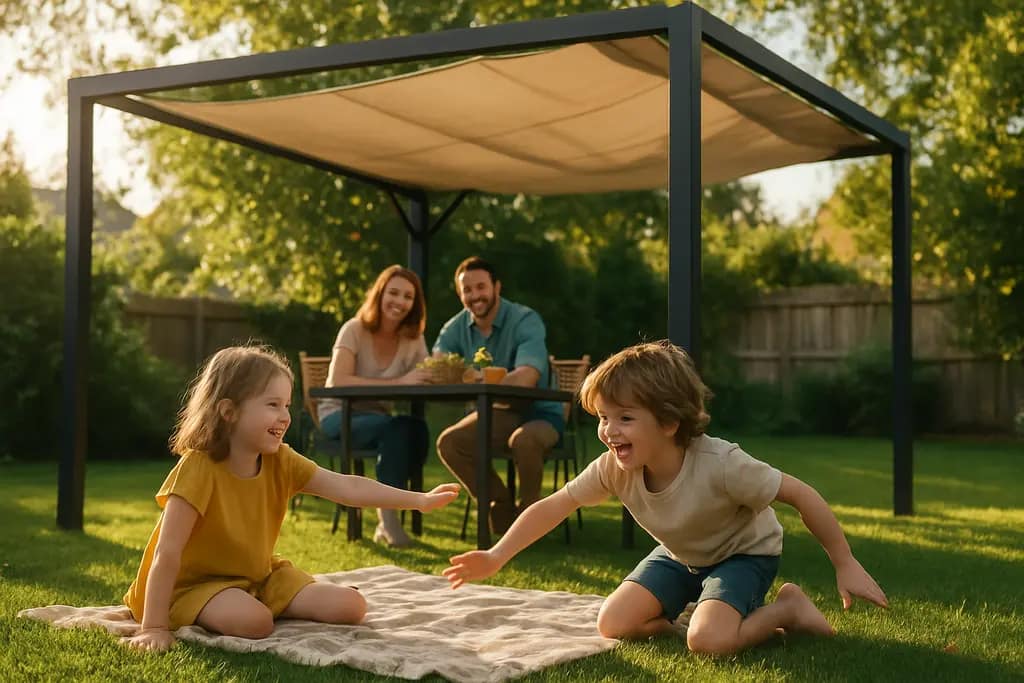
Shade structures can turn a hot patio, deck, or play area into a space people use more often, but they are not just a design purchase. They affect comfort, sun exposure, maintenance, and the project budget. For homeowners and renters planning an outdoor upgrade, the best choice is usually the one that solves a real heat or glare problem without creating structural, permit, or upkeep issues later.
That means shade belongs in the same planning discussion as seating, drainage, lighting, privacy, and safe walking paths. A fabric sail, pergola, umbrella, awning, tree canopy, or roofed pavilion can all help, but they differ sharply in cost, lifespan, wind exposure, and installation risk. The goal is not to cover every sunny spot. It is to shade the places where people actually sit, cook, supervise children, or move between the house and yard.
Why Shade Changes Outdoor Use
Shade Structures And UV Exposure
The health case for shade is clear enough to influence everyday outdoor planning. The Centers for Disease Control and Prevention states that most skin cancers are caused by ultraviolet exposure and recommends using shade from trees, canopies, umbrellas, or other cover to reduce risk, especially when the UV Index is 3 or higher, according to CDC sun safety guidance. Shade does not replace sunscreen, protective clothing, or timing outdoor activity wisely, but it can reduce direct exposure in the places where households spend time repeatedly.
For a home, that point is practical rather than abstract. The most useful shade is often over a dining table, a child play zone, a grill-adjacent prep area, or the door where people pause while carrying groceries or letting pets in and out. If the shaded area is not where daily activity happens, the investment may look attractive in photos while changing little about comfort.
Thermal Comfort Is More Than Air Temperature
Outdoor heat comfort is shaped by more than the temperature on a weather app. Direct sun, reflected heat from paving, air movement, humidity, and nearby walls all influence how hot a person feels. Research in the topic notes shows that shade can sharply reduce radiant heat and improve comfort, although the size of the benefit changes by climate, material, and the amount of sun blocked.
This is why a narrow strip of shade may not solve a west-facing patio that receives late-day sun reflected from concrete. A wider canopy, tree placement, vertical screening, or a different seating location may work better than simply buying a larger umbrella. Before spending, observe the space at the hours you use it most. Morning coffee, midday play, and evening meals may need different shade angles.
Cost Signals Before You Build
Temporary, Semi-Permanent, And Permanent Options
The investment range is wide because the category includes everything from portable umbrellas to engineered metal canopies. Temporary options can be useful for renters, short-term owners, or households still testing how they use the yard. They also allow seasonal adjustment. The tradeoff is that they may need frequent repositioning, storage, and replacement if fabric or hardware wears out.
Semi-permanent options, such as shade sails or retractable awnings, can work well when installed correctly and rated for the site conditions. Permanent structures, including pergolas with fixed covers, pavilions, and steel-frame canopies, usually require a higher budget and a more formal planning process. Anchoring, wind loads, drainage, attachment points, and local requirements can all affect the final scope.
If the shade project is part of a larger outdoor refresh, compare it with other comfort upgrades rather than treating it as a stand-alone purchase. Seating layout, lighting, surface repair, and traffic flow may change where shade should go. For broader project context, this related piece on outdoor living priorities explains why comfort features should be weighed against maintenance and use.
What Drives The Installed Price
Published cost examples in the research show large ranges for playground, parking, and public-space shade projects, with engineered permanent installations costing much more than small portable or single-post options. For a residential property, the same cost drivers usually matter: span, material, wind rating, foundation work, attachment to the home, site access, drainage, and whether electrical or lighting components are included.
Homeowners should be cautious about comparing only the sticker price of a kit. A lower-cost frame may not include footings, fasteners suited to the structure, permits, fabric replacement, labor, or repairs to the surrounding surface. A higher-cost structure may still be a poor value if it shades the wrong area or requires upkeep the household will not maintain.
Match The Project To The Home
Place Shade Where It Changes Behavior
A good shade plan starts with use patterns. Track where people already gather, where they avoid sitting, and where the sun creates glare or heat at the time of day the space matters most. South- and west-facing exposures often create different comfort problems than a shaded north-facing porch. Nearby paving, walls, fencing, and pools can also reflect light and heat.
For a small patio, one adjustable solution may be more useful than a fixed cover that misses the seating area for much of the afternoon. For a larger yard, layered shade can be more practical: a tree for broad seasonal cover, a pergola or canopy for a defined seating zone, and portable shade for flexible use. None of these choices should block safe exits, reduce visibility at steps, or direct runoff toward the foundation.
Combine Trees And Built Shade Carefully
Trees can provide comfort and may affect household energy use, but they should be chosen and placed with care. A U.S. Forest Service simulation of residential tree shade impacts in Sacramento found that each mature tree reduced cooling energy use by about 7.1% and peak cooling demand by about 2.3%, while also creating a winter heating penalty; the reported net savings averaged about $10 per tree annually in that study, based on the tree shade simulation. Those findings are place-specific, so they should not be treated as a promise for every climate or house.
Tree shade also comes with responsibilities. Roots, mature canopy size, leaf drop, watering needs, storm risk, and distance from roofs, foundations, sewer lines, and overhead utilities all matter. A nursery professional, arborist, or qualified local expert can help select species and placement suited to the property. Built cover may provide faster shade, while trees can add long-term cooling and seasonal character if planted wisely.
Safety, Permits, And Maintenance
Structural Work Needs Professional Review
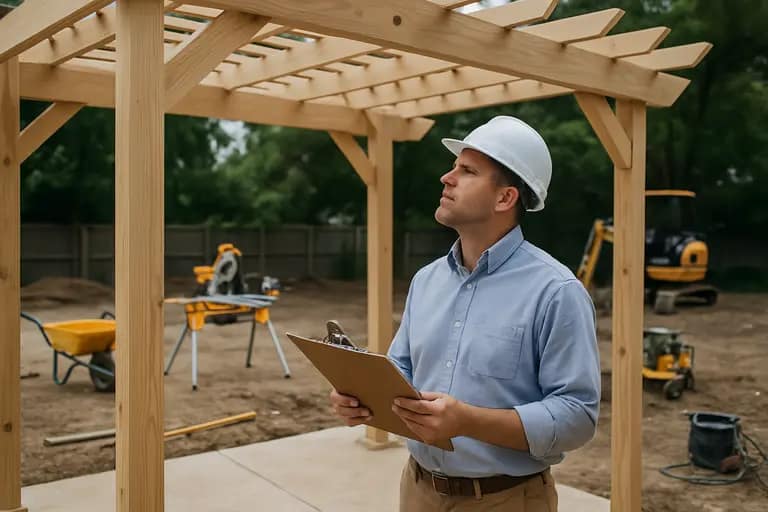
Permanent shade structures deserve the same caution as other exterior building projects. Anything attached to a house, supported by posts, or exposed to wind uplift should be reviewed for local code requirements, anchoring, drainage, and load conditions. Homeowners should not guess at footing size, beam capacity, roof attachment, or fastener spacing. Those details can affect safety during storms and long-term performance.
Projects that involve electrical work, gas lines, plumbing, structural changes, or work at height should be handled by qualified professionals. That includes adding fans, heaters, lighting, or outlets to a covered outdoor area. For those exploring home project tools, a site like HighProTools could provide valuable resources, although manufacturer’s instructions and professional guidance should remain the main source for safety standards.
Upkeep Should Be Part Of The Budget
Maintenance varies by material. Fabric covers may need cleaning, tension checks, seasonal removal, or replacement after sun and weather exposure. Wood structures can require inspection for rot, fastener movement, and finish wear. Metal frames may need checks for corrosion, loose hardware, and drainage around footings. Retractable systems add moving parts that should be maintained according to the manufacturer.
Shade structures with neglected fabric, loose anchors, damaged posts, or sagging supports can become safety concerns rather than comfort upgrades. After strong winds, heavy rain, or falling branches, inspect visible damage from the ground and call a professional if anything appears shifted, cracked, or unstable. Do not climb onto roofs or structures to investigate damage without proper training and equipment.
Shade Structures For A Practical Outdoor Plan
A Measured Choice Beats A Bigger Cover
The most sensible outdoor shade project is not always the largest or most permanent one. It is the one that protects the right activity area, fits the climate, can be maintained, and does not create avoidable safety issues. Start with observation before buying: note sun angles, hot surfaces, wind direction, drainage, and the times when people actually use the space.
Then compare options by total cost rather than purchase price alone. Include installation, permits if required, surface repair, expected fabric or finish replacement, storm exposure, and the chance that a future owner may need to remove or repair the feature. If the property may be sold soon, avoid assuming that a shade upgrade will return its full cost. Comfort and usability are valid reasons to invest, but resale value is uncertain and market-specific.
For many households, a phased approach is the safest way to balance comfort and investment. Test the shade location with a portable product, improve seating and circulation, then consider a permanent structure only after the household knows what problem it needs to solve. Shade structures work best when they are treated as part of a practical outdoor plan: health-aware, climate-aware, professionally reviewed where needed, and sized for real daily use.