

Electrical problems when buying a house can sound alarming because an inspection report may place a loose outlet, an aging panel, and evidence of unsafe wiring in the same section. Those findings do not carry the same risk, so buyers need to separate repairable defects from problems that can affect safety, insurance, or closing.
Electrical defects deserve context rather than panic. The federal government tracks residential electrical-fire data, reinforcing why significant wiring and equipment concerns deserve proper investigation. Not every electrical note is a reason to walk away, but the report should determine what gets investigated before the inspection period ends.
Electrical Problems When Buying a House Are Not All Equal
Some findings are narrow. A missing cover plate, failed receptacle, or damaged switch may require attention without changing the economics of the purchase. Others point to a system-level question: Is the service adequate, has the wiring been altered safely, and can the house support normal modern loads?
The useful distinction is local defect versus system risk. One defective outlet can often be isolated. Repeated tripped breakers, visible overheating, damaged wiring, corrosion inside equipment, or multiple questionable modifications suggest the buyer needs more than a punch-list repair.
A home inspection can identify visible warning signs, but it is not a diagnostic electrical evaluation. A licensed electrician can determine scope, urgency, and whether one defect is part of a larger problem.
Start With the Pattern, Not Just the Individual Defect
One electrical problem on an inspection report does not always tell buyers much by itself. The more useful question is whether the finding appears isolated or whether it is one sign of a broader pattern involving aging equipment, deferred maintenance, or past alterations.
Several small findings can matter more when they appear together. Loose outlets, inconsistent grounding, missing protective devices, unexplained breaker behavior, and amateur-looking modifications may point to a system that deserves closer review rather than a series of unrelated repairs.
Buyers should also pay attention to where the defects appear. Problems concentrated around an addition, remodeled kitchen, finished basement, garage, or converted space can raise questions about whether electrical work was completed correctly and whether additional wiring is concealed behind finished surfaces.
That is why the next step after a concerning inspection finding is often defining the scope of the problem. Before negotiating a repair credit or deciding whether the issue is manageable, buyers need to know whether they are dealing with a simple correction or a larger electrical system concern.
The Panel Can Turn a Small Finding Into a Bigger Question
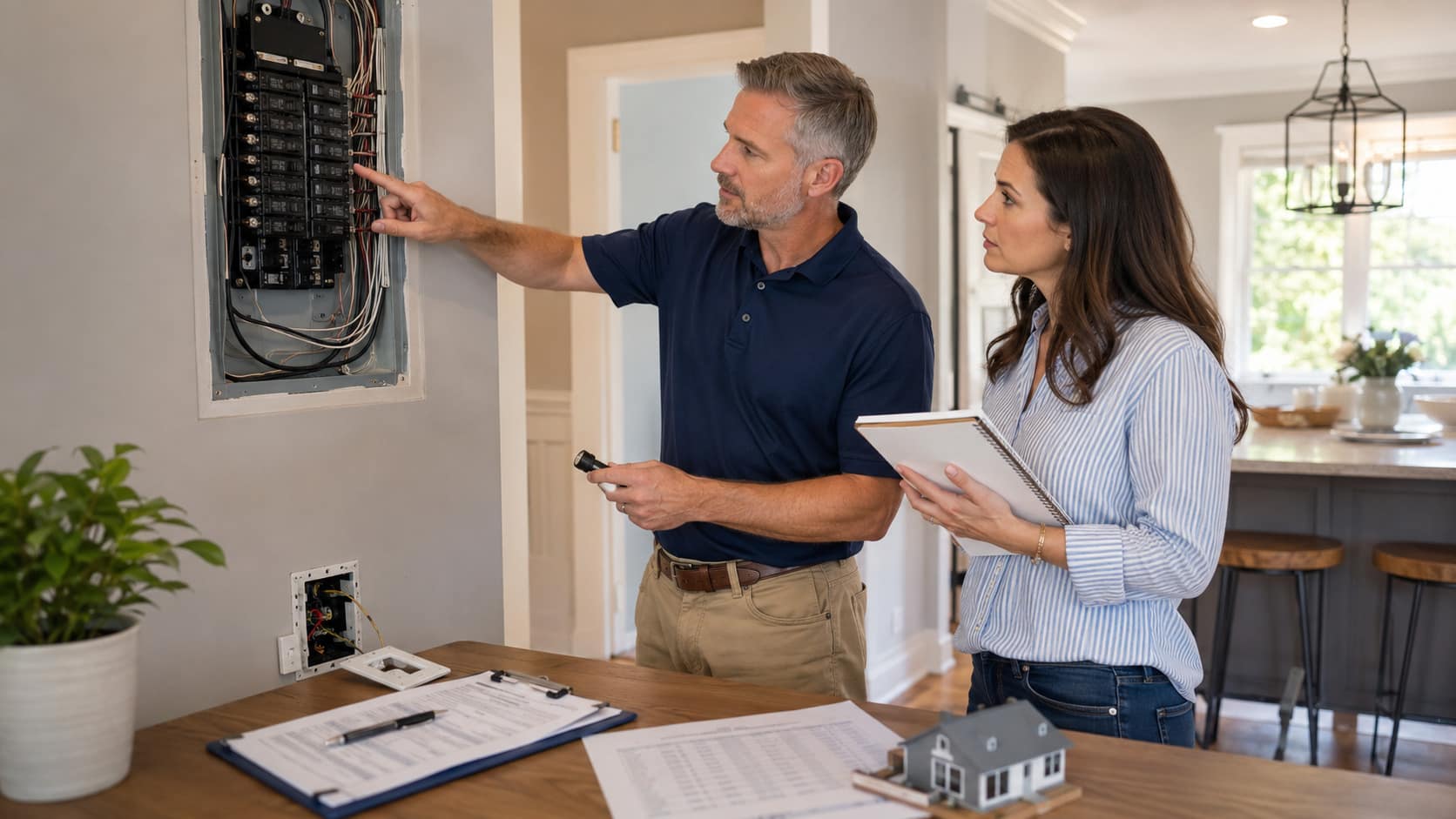
The electrical panel deserves more attention than its appearance. Buyers should ask about service capacity, panel condition, breaker compatibility, signs of overheating or corrosion, and whether alterations appear professionally completed.
An older panel is not automatically unsafe simply because of age. More useful questions are whether components are damaged or obsolete, whether circuits are properly protected, and whether the service can support present and expected demand.
That last point is easy to miss. A house may work normally for its current owner but become strained after a buyer adds an EV charger, induction range, heat pump, workshop equipment, or hot tub. Future electrical load matters because an upgrade that looked optional during the showing can become necessary after move-in.
Grounding, GFCI Protection, and DIY Work Need Context
Ungrounded outlets often appear in older homes, but replacing a two-prong receptacle with a three-prong face does not itself create grounding. The wiring and protection behind the outlet matter more than its appearance.
Ground-fault circuit interrupter protection is especially relevant where electricity and moisture can meet. Home wiring safety guidance recommends professional electrical evaluation when warning signs appear and addresses protective measures such as GFCIs.
Evidence of DIY work deserves similar scrutiny. Added circuits, spliced wiring, open junctions, unusual panel labeling, or renovations without clear documentation can raise questions about how the work was performed.
The inspection report should help buyers sort findings by consequence:
| Finding | Buyer question | Typical next step |
|---|---|---|
| Damaged outlet or switch | Is the defect isolated? | Repair and test |
| Missing GFCI protection | Is protection missing where needed? | Electrician evaluation |
| Ungrounded receptacles | Is grounding absent on one circuit or more broadly? | Determine wiring scope |
| Repeated panel concerns | Is there overheating, improper protection, or inadequate capacity? | Dedicated electrical inspection |
| Visible DIY modifications | Was the work safely completed and permitted where required? | Verify and professionally review |
The table is not a repair-price guide. The same symptom can have different causes, so scope should come before cost.
Inspection Findings Should Change the Negotiation Strategy
Once a problem is confirmed, buyers have more choices than accepting it or walking away. Depending on the contract and local practice, the parties may negotiate repairs, credits, a price adjustment, or another solution before closing.
The strongest request is usually built around documentation. A written electrician’s evaluation and, when appropriate, an estimate give the buyer a clearer basis for deciding whether a repair request is proportionate.
Buyers should also think about who performs significant electrical work. A quick seller repair may close an inspection item without giving the buyer much control over contractor selection or scope. In other cases, completing work before closing may be preferable because the buyer wants a known safety concern resolved before possession.
This is where an inspection contingency becomes valuable: it can provide the contractual framework and time to investigate a finding before the buyer commits to owning the risk.
Insurance and Future Ownership Can Change the Math
Electrical condition can matter beyond the repair invoice. Insurers may ask about a home’s wiring, electrical service, or prior updates, and underwriting standards vary by company and property. Buyers dealing with older or unusual systems should discuss the property with an insurance professional before the transaction reaches its final days.
If the house already has limited capacity and the buyer expects to add major loads, the relevant number may be the cost of a larger upgrade rather than a temporary repair.
That changes how buyers should evaluate inspection negotiations. A seller may correct an immediate defect while leaving the larger system exactly as it was. Buyers planning substantial electrical additions need to understand whether the proposed repair actually solves their concern.
What Should Make a Buyer Slow Down Before Closing
The biggest pressure point is uncertainty. One small defect with a clear repair path is different from several warning signs with no defined scope. Buyers should slow the transaction when they cannot tell whether the issue is isolated, whether concealed work may be involved, or whether insurance and future upgrades depend on remediation.
Recurring breaker trips, heat damage, burning odors, visible arcing, exposed conductors, heavily modified panels, or inconsistent amateur work deserve qualified evaluation rather than guesswork. Unpriced risk is the real problem: without a diagnosis, buyers cannot know what they are agreeing to own.
Electrical problems when buying a house should change the questions buyers ask, not automatically end the purchase. The goal is to identify what is minor, what requires a specialist, what affects insurance or future use, and what remains uncertain. A good deal is not a house with a perfect inspection report; it is a purchase where the buyer understands the defects well enough to price the risk before closing.
Frequently asked questions
Should I walk away from a house with electrical problems?
Not automatically. Many electrical defects are repairable. The decision should depend on severity, repair scope, insurance implications, negotiation options, and whether a qualified electrician can clearly define the problem.
Does a home inspector fully inspect the electrical system?
A general home inspection typically evaluates accessible electrical components and identifies visible concerns. Significant findings may require a licensed electrician to perform a more focused evaluation and determine the necessary repairs.
Can electrical problems affect homeowners insurance?
Potentially. Insurers use their own underwriting standards and may ask about wiring, electrical panels, renovations, or required repairs. Buyers should confirm coverage requirements before closing when significant electrical concerns are identified.
Are ungrounded outlets a major problem when buying a house?
Not always, but they deserve evaluation. Ungrounded outlets are common in some older homes. An electrician can determine whether the issue is isolated or part of a broader wiring condition requiring upgrades.
Who should evaluate electrical problems found during a home inspection?
A licensed electrician is generally the appropriate professional for significant electrical concerns. They can determine the cause, assess safety risks, estimate repair scope, and help buyers understand whether broader system upgrades may be needed.