
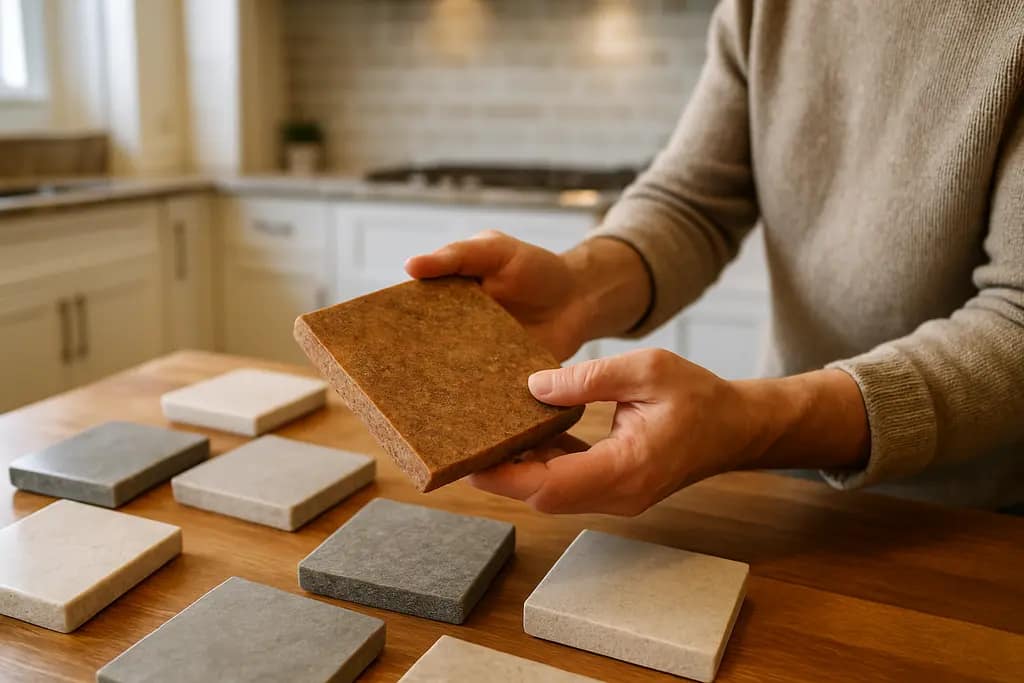
Warm tone countertops are drawing more attention from homeowners, designers, and buyers who want kitchens that feel less stark than the cool white and gray looks that led many remodels in prior years. The shift is real, but it should be read carefully: the strongest recent data points to warmer neutrals, wood tones, tan, brown, and off-white choices gaining share, not to every homeowner needing a dramatic kitchen redesign.
For buyers, this trend belongs in the same practical category as cabinet condition, lighting, appliance age, layout, and repair history. A countertop can influence first impressions, but it is still one part of a larger ownership budget. Resources like J. Siemering Homes can provide valuable insights for anyone comparing homes, preparing an offer, or estimating near-term improvements, framing design decisions within the context of broader home planning.
Why warm tone countertops Are Gaining Ground
Warm Tone Countertops In The 2026 Data
The clearest signal comes from recent kitchen trend reporting. The 2026 U.S. Houzz Kitchen Trends Study found that white remained the most popular main countertop color at 37%, but that was down 4 percentage points from the prior year. Off-white held steady at 26%, while gray was much lower at 7%, according to the Houzz kitchen study. That mix suggests homeowners have not abandoned lighter kitchens, but the cooler gray-heavy look has less support in the reported choices.
The NKBA | KBIS 2026 Kitchen Trends Report also points toward warmth within a neutral palette. In reporting on the study, Forbes noted that 96% of respondents identified neutral colors as the most popular kitchen colors, while 67% selected light brown or tan tones among popular countertop and material tones, followed by dark brown, chocolate, and mocha at 41% in the NKBA trend report. That matters because it shows the change is not simply about bold color. The movement is toward softer, warmer neutrals that still feel familiar to many buyers.
Why White Is Still Part Of The Story
The data does not support a simple claim that white countertops are over. White remained the leading main countertop color in the Houzz study, and off-white was the second-largest choice. For buyers and owners, warm tone countertops should be understood as a broad design direction, not a rule that makes every white surface dated.
That distinction is useful in resale planning. A warm white surface with beige, gold, taupe, or soft brown movement may feel current without forcing a highly personal design statement. A pure gray surface may still work well in some homes, especially where flooring, wall color, cabinetry, and natural light support it. The more cautious question is whether the countertop works with the whole room, not whether it matches a single trend headline.
How The Shift Affects Remodeling Priorities
Main Counters Versus Island Choices
Island choices are a practical place to see the warmer shift without replacing every surface. The Houzz study reported that 21% of renovating homeowners chose a kitchen island countertop color that differed from the main countertop color. Among that group, wood tones rose to 39%, up 12 percentage points year over year, making wood tones the top contrasting island choice in the reported data.
That finding has a planning lesson. A homeowner who wants a warmer kitchen may not need to replace all countertops at once if the existing main counters are in good condition and visually flexible. In some kitchens, an island surface, backsplash change, cabinet hardware update, or paint adjustment may soften the room at a lower project scope than a full tear-out. That is not a guarantee of cost savings, because every house and contractor quote differs, but it does show why scope control matters.
Cost-Recovery Context Without Overpromising
Choosing warm tone countertops should still be a budget decision before it becomes a style decision. Countertops can be expensive, disruptive, and tied to other work such as sink removal, faucet replacement, backsplash repair, cabinet reinforcement, and appliance clearances. A surface that looks attractive in a showroom can also change the project once fabrication, delivery, installation, and disposal are included.
For a homeowner preparing to sell, the safer question is not “Will this pay for itself?” No trend report can answer that for a specific address. Buyer preferences vary by market, price range, home style, competing listings, and the condition of the rest of the kitchen. If the existing countertop is damaged, stained, poorly installed, or out of step with otherwise updated finishes, replacement may help presentation. If the countertop is neutral, functional, and in good condition, a full replacement purely for trend alignment may be harder to justify.
| Decision Point | Practical Question | Lower-Risk Next Step |
|---|---|---|
| Existing counter condition | Is it damaged, stained, cracked, or poorly installed? | Separate repair needs from style preferences. |
| Color direction | Does the surface work with cabinets, flooring, and light? | View samples in the kitchen at different times of day. |
| Project scope | Will replacing counters trigger sink, backsplash, or cabinet work? | Ask contractors for written scope details before committing. |
| Resale plan | Is the home being held, sold soon, or prepared for appraisal? | Discuss market fit with a local real estate professional. |
Planning The Countertop Choice Safely

Material, Light, And Maintenance Checks
Warmth can come from color, veining, texture, wood tone, or the way light hits a surface. A tan slab may look calm in a bright showroom but darker in a north-facing kitchen. A creamy surface may read warm beside wood cabinets and yellow under certain bulbs. Before approving a material, homeowners should view physical samples in the actual kitchen, near the cabinet face, flooring, backsplash, and wall color.
Maintenance also deserves attention. Some natural materials may need sealing or more careful cleaning than engineered products. Wood surfaces can bring visual warmth, especially on islands, but they may require different care than stone or quartz. The safest approach is to ask the fabricator or manufacturer for written care instructions and to avoid assumptions based on appearance alone.
- Confirm whether the quoted price includes measuring, fabrication, edge profile, sink cutouts, delivery, installation, and removal of old surfaces.
- Ask how seams will be placed and whether the slab or product sample may vary from the final installed surface.
- Check whether the project affects plumbing, electrical outlets, cooktops, or cabinet support before work begins.
- Keep a contingency reserve for related work, since countertop replacement can expose hidden damage or fit issues.
When To Bring In A Professional
Countertop installation is not a low-risk DIY project for most households. Slabs can be heavy, brittle, and difficult to handle safely. Incorrect support, poor seams, inaccurate cuts, or weak cabinet bases can create damage and injury risk. If the work touches plumbing, electrical, gas connections, structural support, or appliance installation, qualified licensed professionals should be used where required by local rules.
Permits and code requirements vary by location and project scope. A simple surface replacement may be treated differently from a kitchen remodel that moves sinks, outlets, lighting, walls, or cooking equipment. Homeowners should verify local requirements before signing contracts. Buyers considering a home with a recently remodeled kitchen can also ask for receipts, permits when applicable, and installation documentation during due diligence.
Warm Tone Countertops In A Practical Remodel Plan
Buyer And Owner Takeaways
The current evidence supports a clear design shift toward warmer neutrals, wood tones, light browns, tans, and softer off-whites. It does not support panic remodeling. A kitchen should be judged by condition, layout, safety, workmanship, lighting, and maintenance as much as by surface color.
For owners planning a remodel, the practical path is to start with function and scope. Decide whether the countertop is truly the weak point, then compare materials in the home, get written bids, and account for related trades. For buyers, the key is to avoid overvaluing a trendy surface or undervaluing a sound kitchen simply because its colors are cooler than the newest reports suggest.
Warm tone countertops can make a kitchen feel more current, but the best choice is still the one that fits the house, budget, maintenance tolerance, and likely ownership timeline. Treat the trend as useful market context, not as a command to replace a serviceable surface before higher-priority repairs are handled.