
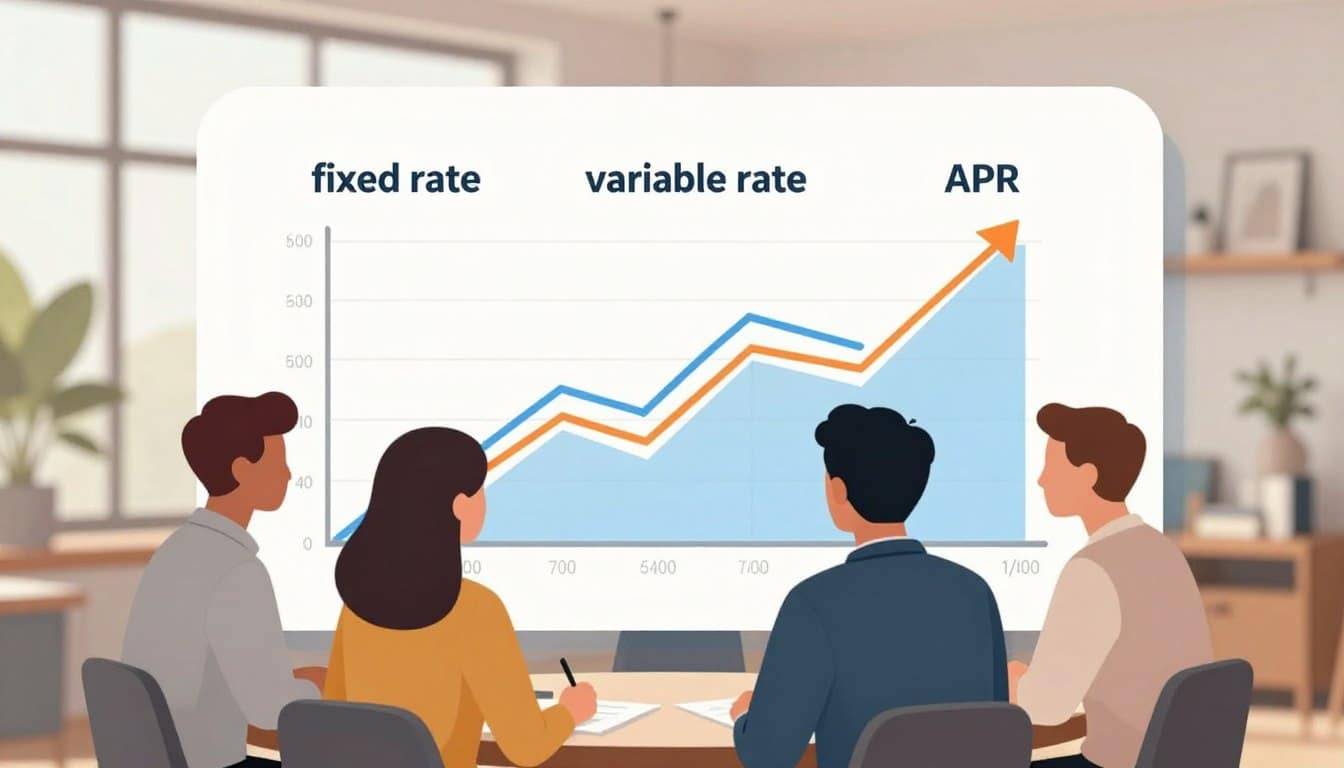
Let’s explore the debt economy. That percentage you see isn’t just a number. It’s the cost of using someone else’s money.
Think of it as a fee for borrowing. Want to buy a home, start a business, or finance a car? That’s the price of your dreams.
The central bank is the real power here. Like a sommelier, they match the economy’s mood with the right rate. If inflation is high, they raise rates to cool things down. If growth is slow, they lower rates to boost it.
When they adjust rates, it affects everyone. This change impacts what you pay for a home loan and other credit. It’s not just about percentages. It’s about the cost of your future.
So, what’s the bottom line? Understanding mortgage rates explained means seeing beyond the financial mystery. It’s about realizing these numbers shape your budget and wealth.
Fixed vs variable impact
Choosing between a fixed and variable rate loan is like a test for your wallet. It’s like the choice in The Matrix between the red and blue pill. Do you prefer a steady monthly payment or the thrill of market rates?
Going for a fixed interest rate is like building a financial fortress. Your rate stays the same for the whole loan term. No matter what happens in the market, your payments stay the same. This brings stability and certainty to your finances.

The variable rate loan is for those who love financial challenges. Your loan interest rate can change. It’s linked to your lender’s prime rate, which changes with the economy. When rates go down, you save money.
But, the tide can turn. This is where things get interesting. With a variable rate loan, you might have a fixed payment. It seems safe. But, rising rates can lead to a financial trap known as the “trigger rate.”
Here’s the danger. When your loan interest cost goes up, your fixed payment might not cover it. This means you’re not paying down your principal. If the interest due is more than your payment, you face negative amortization. Your loan balance starts to grow. You’re paying to owe more.
So, which pill do you choose? The blue pill for fixed-rate peace or the red pill for variable-rate excitement? Your choice depends on how much drama you can handle, your faith in the economy, and your surprise tolerance. Knowing how these rates affect your loan interest is key to your financial journey.
Rate vs APR differences
Lenders often highlight the interest rate because it looks good. But the APR shows the real story. Think of it like this: the interest rate is the main singer. The APR includes everything else, like the band, crew, and extra costs.
The interest rate is just the cost to borrow money. The APR, or Annual Percentage Rate, includes all the extra fees. It’s like the difference between a movie ticket and the whole night out with snacks and drinks.
Be careful here. Lender A might offer a 5.5% interest rate. But their APR could be 5.8%. Lender B might have a 5.7% rate with a 5.75% APR. Suddenly, Lender B’s rate is the better deal.
When comparing types of mortgages, the APR is key. It lets you compare loans fairly, even if fees vary.
| Feature | Interest Rate | APR (Annual Percentage Rate) |
|---|---|---|
| What it is | The cost to borrow the principal loan amount. | The total yearly cost of the loan, including fees + interest. |
| What it includes | Just the interest charged on your mortgage. | Interest + Origination fees + Mortgage insurance + Other lender charges. |
| Its Purpose | Shows your base cost of borrowing; used to calculate your monthly payment. | Shows the true cost to compare different loan offers apples-to-apples. |
| Where you see it | In big, bold letters on ads and quotes. | In the legally mandated Loan Estimate and closing documents. |
| The Bottom Line | The “headline” price. Important for your budget. | The “final out-the-door” price. Crucial for comparison. |
Always, always check the APR. The interest rate shows your monthly payment. The APR shows the total cost of the loan. It’s the most honest number.
Timing the market realistically
You’ve heard the advice: ‘Buy when rates are low.’ But what if they’re always changing? The idea of perfect loan interest timing is like searching for a unicorn. Central banks, like the Federal Reserve or the Bank of Canada, decide on rates just eight times a year. That’s eight chances in 365 days of economic ups and downs.
Think of each announcement as a season finale for the economy. The previews (economic forecasts) create buzz. The episode (the rate decision) brings drama. The post-show analysis (market reactions) sparks endless debate. But trying to plan your life around these eight moments is like planning your wedding based on the weather forecast for a specific Tuesday in June.
The realistic approach isn’t about beating the bond market. It’s about being ready for any financial situation. Your strategy should be like being a boy scout—always prepared.
| Timing Strategy | Theoretical Advantage | Practical Reality | Who It’s For |
|---|---|---|---|
| Monitoring Central Bank Reports | Get ahead of official rate changes | Reports are dense, and markets often price in changes months early | The policy wonk with time to parse economic jargon |
| Following Bank Economic Forecasts | Access to proprietary bank analysis | Forecasts are frequently wrong; banks have products to sell | Someone who enjoys reading multiple conflicting opinions |
| Waiting for a Specific Rate Target | Lock in at an ideal psychological number (e.g., “under 5%”) | You might wait forever while missing good opportunities | The perfectionist with a very flexible timeline |
| Using the Early Renewal Window | Gives you 180 days to shop without pressure as your term ends | Requires discipline to start the process early | The organized planner who hates last-minute rushes |

The early renewal window is your financial get-out-of-jail-free card. Most lenders let you lock in a new rate up to 180 days before your current term expires. This isn’t a minor perk; it’s a six-month head start. It turns the high-pressure game of loan interest roulette into a leisurely shopping period.
Consult the forecasts, by all means. Read the Monetary Policy Reports if you find macroeconomics soothing. But remember: economists are often just highly educated weathermen predicting a storm that might be a drizzle. A recent analysis of mortgage rate forecasts shows how even expert predictions shift dramatically quarter to quarter.
The true cost of waiting for the perfect loan interest moment can be measured in more than just basis points. It’s measured in stalled life plans, missed housing opportunities, and endless anxiety. The market’s bottom is only visible in hindsight.
So what’s the winning move? Build a personal budget that can stomach a rate hike or two. Make your decision when it aligns with your life goals—buying the home, funding the renovation, consolidating debt—not when you think you’ve decoded the bond market’s secret handshake. Your life timeline is more predictable than the loan interest cycle will ever be.
In the end, the best time to secure a loan interest rate is when you need the loan. The second-best time is during your early renewal window. Everything else is just speculation dressed up as strategy.
Long-term cost examples
That $264 monthly difference on a $300,000 loan? It’s not just a car payment. It’s a financial time bomb. Over 25 years, that 1.5% rate jump costs you far more than simple multiplication suggests. Compound interest works like a silent tax on your future.
With current averages around 6.25%, as tracked by Bankrate, your starting point matters immensely. A seemingly small decimal today dictates your financial climate for decades. This is the core of any honest mortgage rates explained guide.
Your down payment strategy feeds directly into this math. A smaller initial payment might get you in the door, but it often invites PMI and can nudge your rate higher over the full term, as detailed in down payment guides. That compounds the long-term pain.
Think beyond the monthly statement. That extra $264 could fund retirement contributions, college savings, or actual vacations. The real cost is measured in life choices foregone.
Run your own numbers. Use online calculators. See how a half-point shift changes your 30-year story. This final arithmetic isn’t about approval; it’s about the life you can afford after the mortgage payment. That’s the ultimate lesson when mortgage rates explained move from theory to your kitchen table.