

You’ve reached the end of your financial journey, down payment in hand. The finish line is just ahead. But, just as you’re about to cross it, a group of people appear with their hands out.
These are your closing fees. They’re like the entrance fee for joining the exclusive club of homeowners.
In simple terms, they’re the costs of moving a big asset. We’re talking about 1.5% to 4% of your home’s price. For a $500,000 home, that’s $7,500 to $20,000 you need upfront.
This isn’t a surprise. It’s a planned expense you must include in your budget. The costs include land transfer taxes, legal fees, title insurance, and inspections. For a full list of closing costs, check out the detailed menu.
Common buyer fees
If your down payment is the star quarterback of your home purchase, buyer closing costs are the entire offensive line. They are essential but not seen by fans. These costs are mandatory fees on your path to owning a home.
Let’s break down the roster. Each player has a specific role and price tag.
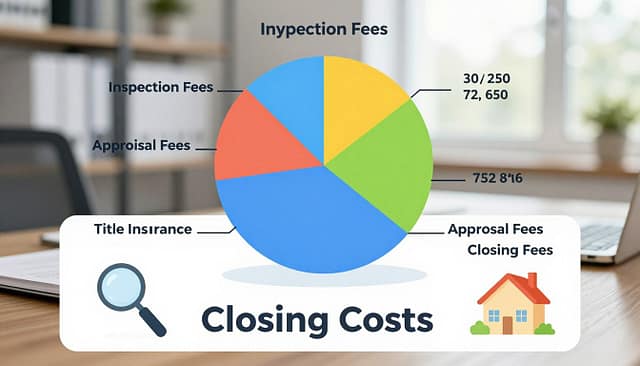
The undisputed heavyweight champion is the Land Transfer Tax. It’s the government’s fee for joining the property-owning class. The cost varies with the purchase price. There’s no room for negotiation here; it’s the law.
Next, you have your legal counsel. Legal Fees ($500 to $1,500) are more than just a signature. They cover navigating legal complexities. Your lawyer ensures your property is clear of any hidden issues.
Then comes the detective: the Home Inspector ($300 to $1,000). They check the property thoroughly. This is to avoid any surprises that could turn your dream home into a financial burden.
Your mortgage lender often demands a Property Appraisal ($300 to $600). This is not about your feelings for the house. It’s a detailed check to ensure the property’s value matches your loan. The bank needs to protect its investment.
One of the smartest buys is Title Insurance (around $250). This is a one-time fee for a permanent bodyguard. It protects you against hidden title defects, survey errors, or fraud from previous owners. For more on these fees, check out this guide to closing costs and mortgage fees.
Lastly, there’s Property Insurance. Your lender won’t give you a dime without proof of coverage. The cost varies based on your home’s value, location, and features. It’s a necessary safety net.
Understanding these buyer closing costs makes you an informed buyer. You’ll know exactly where your money goes before you get the keys.
Who pays what
Closing costs are divided in a way that seems fair. It’s like a dance, with each side playing their part. This is how real estate works.
This division is based on tradition, not law. Buyers usually pay most of the costs. They’re helping to make the transfer of ownership smooth.
Your tab, the buyer’s closing costs, usually includes:
- Legal fees: Your attorney’s work to check contracts and ensure the title is clear.
- Land transfer taxes: The government’s fee for recording the property’s new owner.
- Title insurance: Insurance to protect against unexpected claims on the property’s history.
- Inspections: The cost of checking the property from foundation to roof.
- Loan origination fees: The bank’s fee for handling your mortgage.
Sellers have fewer costs but they’re important. They’ve agreed to give up their equity. Their main cost is the real estate agent’s commission.
This commission is usually part of the sale price. Sellers might also pay for agreed-upon repairs. It’s like they’re paying for the champagne.
A detailed analysis on who pays closing costs shows this split is common in the U.S. The agreement should clearly state who pays what.
This tradition helps everyone know their part before talks start. It makes things clearer.
This isn’t a strict rule. It’s more like a social agreement. Knowing this helps you negotiate better.
The buyer’s list is longer, but the seller’s biggest cost is the commission. It’s a fair way to divide the work.
Now you know the usual roles. Let’s see how you can change them.
Negotiation opportunities
Negotiating closing costs is not like haggling at a flea market. It’s about using smart strategies. The closing fees are not set in stone. They are made up of different parts that can be adjusted.

Start by talking to service providers. Legal fees can change a lot. Find out if your lawyer charges a flat fee or by the hour. Get quotes from at least three lawyers.
Home inspectors might offer discounts during slow times, like late fall or winter. Booking early can also get you a better rate.
Being in a union, alumni group, or professional organization can help you get lower insurance rates. This is because you’re part of a big group. Always ask about these discounts.
| Service Provider | Common Fee Structure | Negotiation Tactic | Potential Savings |
|---|---|---|---|
| Real Estate Lawyer | Flat fee or hourly rate | Request multiple quotes; ask for itemized estimate | $300 – $800 |
| Home Inspector | Fixed per inspection | Book during off-peak season; bundle with other services | $100 – $300 |
| Insurance Agent | Annual premium | Leverage group discounts (alumni, employer); increase deductible | 10% – 20% annually |
| Title Company | Package fee | Compare lender’s recommendation with independent companies | $200 – $500 |
Think about upgrading your home. Installing security systems, smoke detectors, or backwater valves can save you money. These upgrades can lower your insurance rates.
Don’t overlook government help. Many states and cities offer rebates and grants, mainly for first-time buyers. Look for land transfer tax relief and other programs on your state’s housing authority website and local city portals.
Negotiation is about being smart, not cheap. You can’t argue with the taxman, but you have other chances to save. Compare, contrast, and question every estimate. Your closing fees should show value, not just follow tradition.
For a full guide on the process, from offer to ownership, check out this detailed guide on understanding closing costs. It gives great context on how these negotiated parts fit into the bigger picture.
Budgeting ahead
Think of that 3% rule for buyer closing costs as your opening chess move. It’s solid, conventional, and keeps you in the game. But victory requires seeing several moves ahead.
The real power move? Treating your buyer closing costs as a separate theater of war. Open a dedicated savings account with a name like “Closing Day Fund.” This isn’t just accounting. It’s a psychological moat that protects this cash from merging with your down payment or vanishing into daily life.
Your financial campaign doesn’t end at the settlement table. What about the moving truck from U-Haul or Penske? The locksmith’s visit? That first, inevitable $300 trip to The Home Depot? Budgeting ahead means planning for the first 90 days of ownership, where hidden expenses appear like plot twists.
Map a post-closing budget. Factor in new furniture from IKEA or Wayfair, urgent repairs, and utility deposits. This forward-looking strategy transforms you from an anxious buyer scrutinizing every fee to a confident owner who can actually enjoy the new front door. The goal isn’t just to cover buyer closing costs. It’s to buy yourself peace of mind.