

Rising home utility costs are turning electricity into a more variable part of the ownership budget. U.S. residential electricity pricing data for May 2026 moved noticeably higher from a year earlier, which means homeowners can see larger bills even when household habits have not changed dramatically.
That pressure belongs beside repairs, insurance, taxes, and the other hidden ownership costs that arrive after closing. Treating utilities as one fixed monthly number can make an otherwise reasonable household budget look more stable than it really is.
Utility Bills Can Drift Up Even Without a Major Lifestyle Change
Homeowners often assume that a higher electric bill must mean they used more power. That is only part of the equation. Changes in utility rates, fixed service charges, fuel-cost adjustments, delivery fees, and seasonal pricing can all increase the final bill even when household routines stay similar.
That makes month-to-month comparisons less useful unless homeowners separate price changes from usage changes. Looking only at the total amount due can hide whether the problem is rising consumption, a higher rate, or both happening at the same time.
Weather can also distort the picture. A hotter summer or colder winter can push heating and cooling systems to run longer, making one season look unusually expensive even when the home and equipment have not changed.
The better approach is to build a longer-term baseline using several months of bills. Tracking kilowatt-hour use, rate changes, and seasonal peaks gives homeowners a clearer picture of whether rising costs are temporary, structural, or connected to something in the home that needs attention.
Rising Home Utility Costs Are Not Just About Usage
The latest monthly retail data available from the U.S. Energy Information Administration shows average residential revenue per kilowatt-hour at 18.44 cents in May 2026, 6.2% higher than in May 2025. Residential electricity sales volume also increased 1.7% over the same period. The agency uses average revenue per kilowatt-hour as a proxy for retail electricity prices rather than as the rate every individual household pays.
That distinction matters. A homeowner’s bill can rise because the utility price changed, the household used more electricity, or both occurred together. Reviewing the May electricity price data shows substantial differences among states, reinforcing why a national percentage cannot predict one family’s next bill.
Bills may also include customer charges, delivery costs, supply charges, taxes, riders, or time-based pricing depending on the utility and location. Rate and usage are separate variables, so lowering consumption does not guarantee that the final dollar amount will decline by the same percentage.
Weather adds another layer. A hotter month can push air-conditioning use higher, while a colder season can increase electric heating demand. New household members, remote work, an electric vehicle, a pool pump, or different appliance use can also shift consumption without any problem in the house itself.

Read the Bill Before Blaming the House
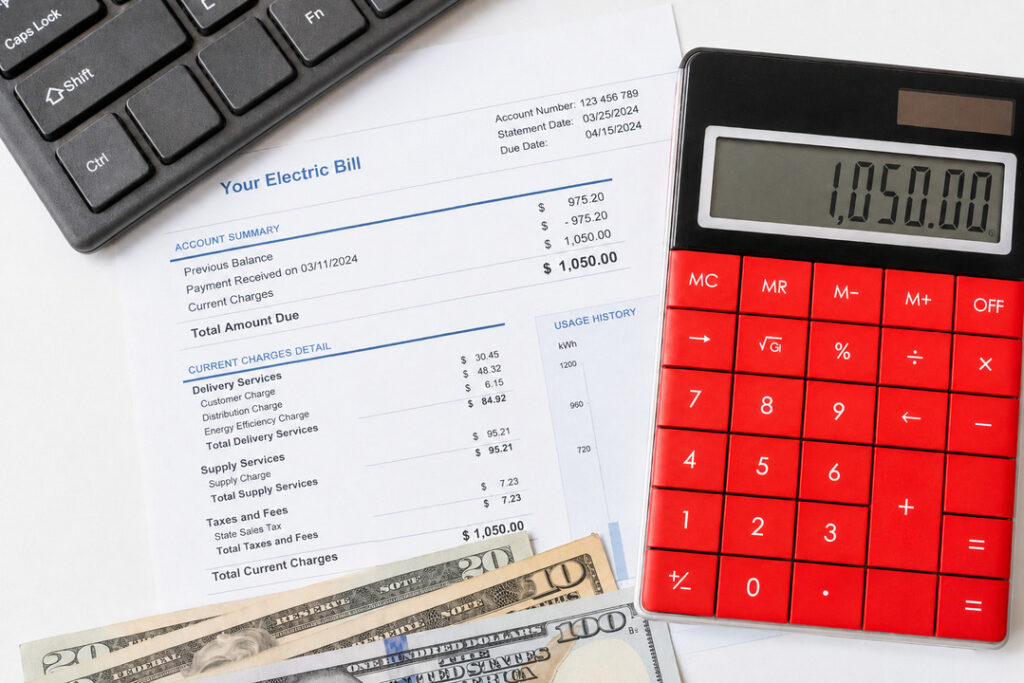
A high bill should start an investigation, not an immediate equipment purchase. Compare several months of statements and separate the amount of electricity consumed from the price charged for each unit.
Look at the same month from the prior year when those records are available. Comparing July with April may mainly reveal a seasonal difference, while comparing one July with another can provide a more useful starting point.
The table below helps separate common bill changes from the next question a homeowner should ask.
| Bill Signal | Possible Explanation | Next Check |
|---|---|---|
| Usage rises, rate stays similar | Weather, occupancy, HVAC runtime, new equipment | Compare daily or monthly kWh |
| Usage stays similar, bill rises | Rate or fixed-charge increase | Review rate and fee changes |
| Sudden usage spike | Equipment problem or behavior change | Check HVAC, water heating, appliances |
| Summer bills climb sharply | Cooling load or poor heat control | Review HVAC operation and insulation |
| Bills rise after moving in | Different household habits or larger home | Build a new usage baseline |
| Peak-hour costs increase | Time-based rate structure | Review utility rate schedule |
One abnormal month does not establish an efficiency problem. Several comparable months showing higher consumption create a stronger reason to investigate.
A weather-normalized comparison is especially useful when possible because extreme temperatures can hide whether the home itself has become less efficient. Utility portals sometimes provide daily or hourly consumption information that can reveal unusual patterns more clearly than the total bill.
HVAC and Insulation Deserve the First Efficiency Check
Heating and cooling can drive a substantial share of household energy use, making HVAC performance a logical place to investigate persistent consumption increases. Dirty filters, blocked airflow, duct problems, neglected maintenance, inappropriate thermostat settings, or aging equipment can cause longer runtimes.
Replacement should not be the automatic response. An older system that is operating properly may not justify an expensive upgrade solely because electricity prices increased. Maintenance, air sealing, insulation, shading, and operating changes may offer a more proportionate first step.
Insulation deserves attention because the HVAC system cannot efficiently maintain temperature when conditioned air escapes or outside heat moves easily through the building envelope. Attics, crawl spaces, walls, doors, and penetrations can all influence comfort and runtime.
Homeowners who want a broader benchmark can use a home energy comparison that evaluates annual energy use against similar homes and separates heating and cooling from other uses such as appliances, lighting, and water heating.
That approach helps prevent spending thousands of dollars to solve the wrong problem. Whole-house efficiency matters because improving one component may have limited value when another component is driving the waste.
Build a Utility Budget Around Seasonal Ranges
A household budget works better when electricity is treated as a range rather than a permanent monthly amount. Start with at least a year of bills when available and identify low, typical, and high-cost months.
Someone who budgets only from a mild spring bill can be surprised when heavy cooling or heating season arrives. A better monthly plan sets aside enough during moderate periods to help absorb expensive seasons.
Rate changes should be incorporated as soon as the utility announces them. If the price per kilowatt-hour rises, last year’s bill is no longer a reliable dollar forecast even when expected consumption stays unchanged.
Homeowners can also maintain a seasonal cash cushion for utilities instead of pulling unexpected summer or winter costs from repair savings. Separating those reserves protects money intended for a failed water heater, roof problem, plumbing leak, or other ownership expense.
Household changes should trigger another recalculation. Working from home, adding an EV charger, replacing gas equipment with electric equipment, adding a hot tub, or changing occupancy can materially alter the home’s energy profile.
Track the Signals Before Replacing Equipment
Future bills should be evaluated for patterns rather than isolated surprises. Watch kilowatt-hour use, rate changes, HVAC runtime, indoor comfort, unusual sounds, repeated breaker issues, moisture, rooms that are difficult to condition, and sudden changes that cannot be explained by weather or occupancy.
Persistent comfort problems can justify a professional assessment, particularly when the HVAC system runs heavily without maintaining the desired temperature. An energy audit or qualified contractor may help distinguish equipment problems from insulation, duct, air-sealing, or building-envelope issues.
Major replacements should still be evaluated against remaining equipment life, repair cost, energy savings, financing cost, and how long the homeowner expects to keep the property. Repair before replace can be the better financial choice when a smaller correction restores normal performance.
Electricity pricing will continue to vary by utility, state, generation mix, regulation, infrastructure needs, weather, and household demand. National trends can show direction, but they cannot tell one homeowner whether the next bill will rise or which improvement will produce the best return.
Rising home utility costs are easier to manage when the household knows what is actually changing. Track the rate separately from consumption, compare seasons fairly, test HVAC and insulation before making expensive upgrades, and budget utilities as a moving ownership cost rather than a number that stays fixed after closing.
FAQs
Why did my electric bill rise if I used about the same amount of electricity?
The price per kilowatt-hour or other bill charges may have changed. Compare both consumption and pricing on current and previous statements rather than judging the increase from the final dollar amount alone.
Should I replace an old HVAC system just to lower electricity costs?
Not automatically. Condition, efficiency, repair history, operating cost, insulation, ductwork, climate, replacement price, and expected ownership period should all be considered before replacing functioning equipment.
How much should homeowners budget for electricity each month?
There is no reliable national amount for an individual household. Climate, home size, utility rates, equipment, occupancy, fuel mix, and usage vary, so a home’s own annual billing history provides a better starting point.