
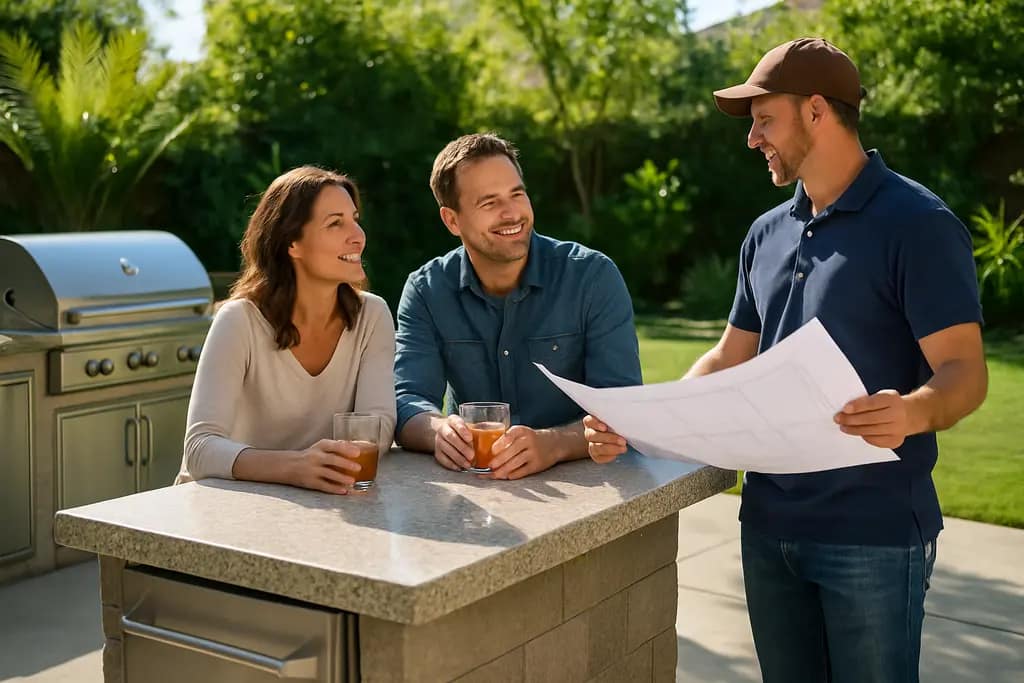
Outdoor kitchens are getting more attention from homeowners who want usable backyard space and from sellers who want exterior features to read well in a listing. The resale case in 2026 is not that every project pays for itself. The stronger reading is more cautious: buyer interest is real, but value depends on design fit, installation quality, climate, price point, and whether the work solves an actual use problem instead of simply adding expensive equipment.
That matters for buyers as much as sellers. A polished cooking area can make a home feel better prepared for entertaining, yet it can also signal future maintenance, utility connections, and repair exposure. Anyone comparing homes should look past the grill and counters and ask how the area was built, whether the work appears durable, and whether high-risk systems were handled by qualified trades.
Why Outdoor Kitchens Matter To Resale
Outdoor Kitchens In Listing Data
The most useful resale data treats exterior upgrades as market signals, not promises. Forbes reported that outdoor kitchens paired with bluestone patios were associated with a 2.2% average resale value lift in a Zillow study discussed in 2025, according to Forbes outdoor improvement trends. That figure is worth attention, but it should not be treated as a universal return for every property.
A percentage gain can look precise while still hiding major local variation. A compact urban lot, a suburban home with a deep patio, and a warm-climate property with a long outdoor season do not offer the same use case. Buyers also differ by price tier. In some segments, a built-in cooking area may be expected; in others, buyers may prefer lower upkeep and more flexible yard space.
For sellers, the practical takeaway is to evaluate whether the feature fits the home rather than assuming the phrase itself carries the value. A well-scaled project that looks integrated with seating, shade, lighting, and circulation is more likely to help than a large installation that crowds the yard or feels detached from the way people would actually use the property.
What Buyers May Be Reading Into The Feature
Buyers often read an exterior cooking area as a lifestyle feature, but they also read condition. Clean counters, weather-resistant materials, adequate clearance, and safe utility connections can support confidence. Rust, loose stone, damaged burners, water intrusion, poor drainage, or awkward placement can have the opposite effect.
That inspection mindset is especially useful for home search. A backyard feature can make listing photos stand out, but buyers should still compare it with roof age, mechanical condition, interior maintenance, and location. For insights into home searches from a related network perspective, J. Siemering Homes offers valuable information.
Outdoor Kitchens And Buyer Demand Signals
Houzz Data Shows Active Renovation Interest
The 2026 U.S. Houzz Outdoor Trends Study gives a clearer view of homeowner demand. Houzz surveyed 1,191 homeowners and reported that 48% of renovating homeowners included an outdoor cooking area in their outdoor renovation plans; it also found that 95% of new outdoor cooking areas were built from scratch rather than from prefab kits, according to the 2026 Houzz outdoor study.
Those figures point to a shift toward more permanent, site-specific builds. That can support resale appeal when the installation looks intentional and durable. It can also raise the stakes. A custom installation usually involves more planning, higher sunk cost, and less ability for a future owner to remove or reconfigure the area without visible repair work.
The same Houzz survey reported that 68% of new outdoor cooking areas included plumbing, electrical, or heating infrastructure. That detail matters because utility infrastructure changes the project from a simple backyard refresh into a higher-risk home improvement. It may add convenience, but it also increases the need for qualified installation, weather protection, and documentation.
Demand Is Not The Same As Automatic Value
Renovation popularity and resale recovery are related, but they are not identical. A feature can be popular because homeowners enjoy using it, while buyers still discount it if it appears overbuilt, poorly maintained, or mismatched with the property. Outdoor kitchens can strengthen a listing when they support daily living, but they should compete with other spending priorities such as roof replacement, water management, HVAC condition, and basic repairs.
For homeowners planning to sell in the near term, adding a full build solely to chase resale can be risky. The safer approach is to compare the project cost with the likely buyer profile and the condition of the rest of the property. If the home has visible deferred maintenance, an expensive backyard feature may not offset buyer concerns elsewhere.
Cost Recovery Needs Careful Reading
Where Value Can Leak Away
Cost recovery depends on scope discipline. Counters, cabinets, grill equipment, refrigeration, sinks, lighting, roof structures, heaters, and utility runs can quickly move the budget beyond what the local market rewards. A restrained, durable setup may read better than a feature-heavy build that creates maintenance questions.
Materials also matter, but not in a luxury-for-its-own-sake way. Exterior surfaces face sun, freeze-thaw cycles in many regions, moisture, grease, insects, and cleaning chemicals. If materials are not suited to outdoor use, a project can age quickly. Buyers may notice failing finishes before they notice the original cost.
Homeowners should also be cautious about assuming that every buyer wants the same setup. Some may value a gas grill connection; others may worry about maintenance. Some may like a sink; others may see plumbing as one more system to inspect. Outdoor kitchens should be planned around likely use and local expectations, not just the longest feature list.
A Simple Planning Filter
Before committing to a major project, homeowners can run the idea through a short filter:
- Use: Will the household cook outside often enough to justify the cost?
- Fit: Does the layout leave enough room for seating, circulation, and yard function?
- Durability: Are materials and appliances intended for outdoor exposure?
- Risk: Does the work involve gas, electrical, plumbing, heating, or structural changes?
- Resale Context: Would buyers in this price range expect the feature, or would simpler improvements matter more?
This filter does not assign a resale number. It helps prevent a common mistake: treating a backyard project as a guaranteed financial return instead of a home improvement with both lifestyle and resale dimensions.
Project Scope And Safety Boundaries
When To Hire Qualified Pros
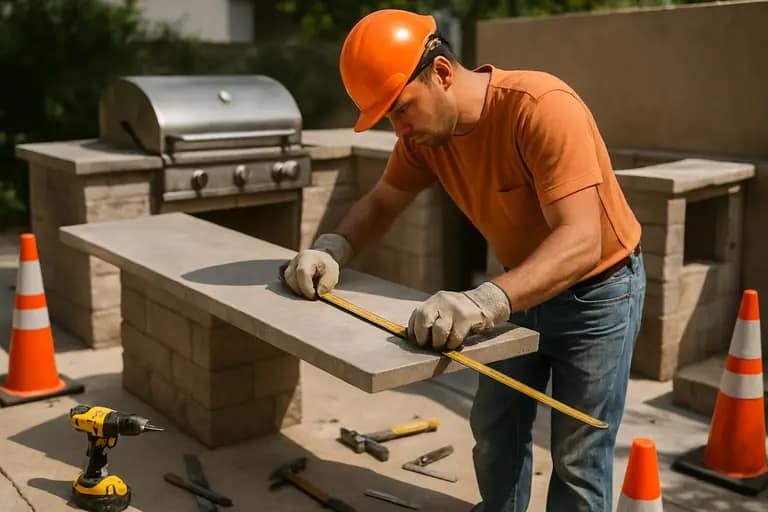
Because many outdoor kitchens include utility infrastructure, safety should set the project boundary. Gas lines, permanent electrical circuits, plumbing, drainage, heating elements, load-bearing covers, and major masonry work are not casual weekend tasks. Homeowners should use licensed or otherwise qualified professionals where required and keep records of permits, invoices, equipment manuals, and warranties.
Renters should be even more cautious. Permanent cooking areas, utility connections, wall penetrations, or attached covers can violate lease terms or create liability. Portable, manufacturer-approved equipment used exactly as directed is usually the safer discussion point with a landlord, but permanent installation should not happen without written permission and proper professional work.
Buyers evaluating an existing installation should ask for documentation, not just receipts for appliances. Useful records may include contractor invoices, appliance manuals, utility work documentation, and maintenance history. If the feature includes gas, wiring, plumbing, heating, or a cover structure, a qualified inspection is a sensible step before relying on it as a value asset.
Maintenance Should Be Part Of The Budget
Outdoor cooking spaces need ongoing care. Grease management, weather exposure, appliance covers, stone or counter upkeep, drainage, cabinet hardware, and winterization in cold climates can all affect long-term condition. A seller may benefit from a clean, functioning setup; a buyer inherits the upkeep.
That is why resale discussions should include the cost of ownership. A feature that looks attractive in photos can become a burden if replacement parts are hard to find or if the original build trapped water, exposed wiring, or placed appliances where heat and weather shorten their life. Cautious planning reduces those risks.
Outdoor Kitchens In The 2026 Resale Conversation
Outdoor kitchens can be a meaningful resale signal in 2026 because homeowners are actively investing in outdoor cooking areas and listing data has associated them with value gains in some cases. The evidence supports interest and potential upside, not a fixed return that applies to every property.
For sellers, the best resale case usually comes from a project that is safe, documented, proportional to the home, and visually connected to the rest of the outdoor living area. For buyers, the right question is not only whether the feature is attractive, but whether it was built well enough to remain an asset after closing.
A cautious decision weighs enjoyment, local buyer expectations, installation risk, and competing repair needs. In that frame, outdoor kitchens are neither a shortcut to higher property value nor a feature to dismiss. They are a project category where planning quality, professional execution, and market fit decide whether the backyard helps the sale or simply adds another line item to maintain.