
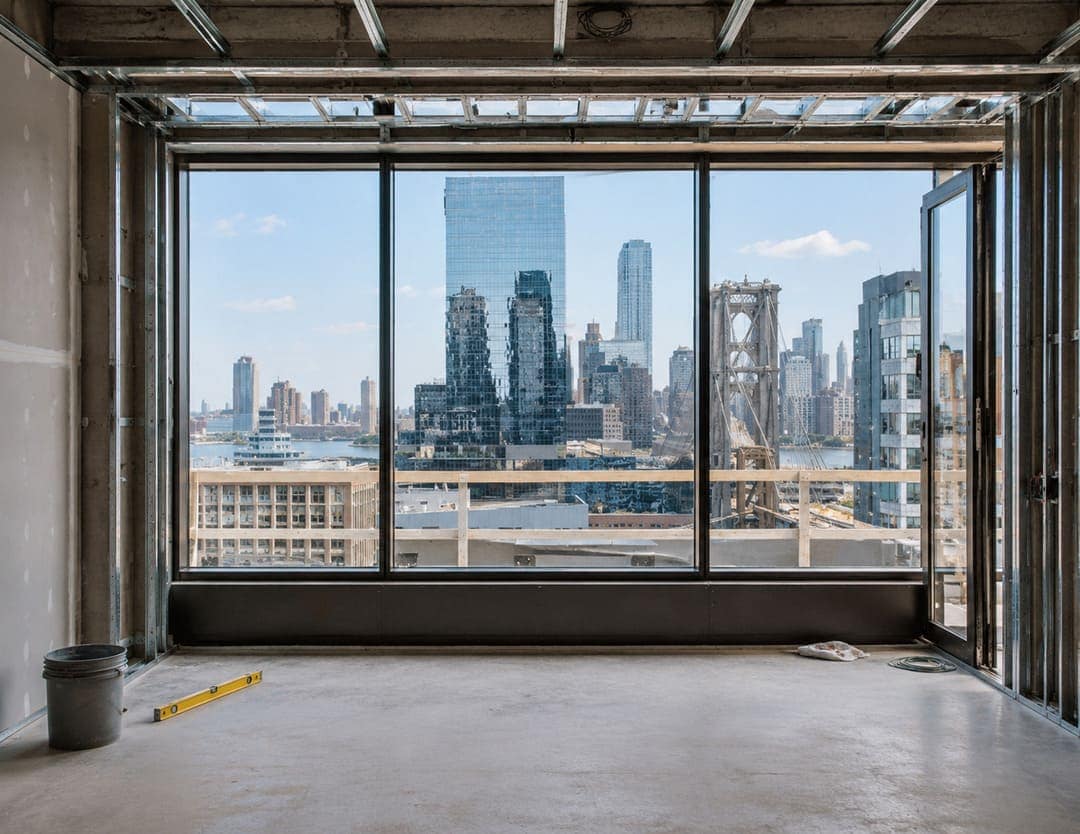
An office tower can become an attractive apartment building without becoming ordinary housing. Office-to-apartment conversion due diligence must test how the original commercial structure was altered, which residential systems were added, and whether the finished building has reached the legal and physical condition the sales materials imply.
Early review of seller disclosure documents can identify known defects, repairs, construction history, and questions that need specialist follow-up. A converted unit may look newly finished while the structure, façade, elevators, utilities, and portions of the mechanical system remain decades old.
A Conversion Combines New Work With an Existing Building
New finishes can create the impression of new construction. The more accurate view is a hybrid: new residential layouts and systems installed inside an existing structural frame, envelope, and vertical circulation system.
Buyers need to know which parts were replaced, reinforced, reused, relocated, or left unchanged. Conversions may involve cutting floor openings, adding shafts, changing egress, modifying façades, installing residential plumbing, creating light wells, or adding floors and rooftop amenities.
The complexity became visible in New York after structural concerns at the former Pfizer headquarters prompted broader scrutiny of adaptive-reuse work. Inspectors later halted construction at 222 Broadway, another office-to-residential project, while reviewing cracked beams and reporting procedures.
That event does not make conversions inherently unsafe. It shows why the scope of alteration matters more than the age of the kitchen appliances.
Structural Modifications Need Independent Documentation
Ask for a clear description of major structural work, including vertical additions, widened floor plates, removed columns, new openings, transfer systems, rooftop loads, and changes needed for residential layouts.
Documents may include plans, permits, inspection records, engineer letters, testing, and sign-offs. Availability varies by jurisdiction and completion status.
A general inspection is not a substitute for reviewing building-level work. The inspector may evaluate the unit and accessible areas but usually cannot verify concealed structural modifications or analyze engineering calculations. Where the records or observed conditions raise questions, the buyer may need an independent structural engineer, architect, or other qualified specialist.
Warning signs include unresolved violations, stop-work history without clear closeout records, major design revisions, unexplained cracking, recurring water intrusion, or answers that rely on verbal assurances instead of documents.
Legal Occupancy Must Match the Unit Being Sold
A commercial building requires approvals before residential occupancy. The exact documents depend on the jurisdiction, but buyers should confirm that the unit and building can legally be occupied as represented.
In New York City, for example, a Certificate of Occupancy states the legal use and permitted occupancy. A Temporary Certificate of Occupancy may allow occupancy while specified project items remain open, but the buyer should understand its expiration, renewal history, covered areas, and outstanding conditions.
The city’s building-history search guidance explains how records can reveal certificates, applications, permits, complaints, violations, actions, and inspections. Buyers elsewhere should use the comparable municipal or county system and confirm findings with qualified professionals.
Do not assume that a furnished model unit proves the entire building is complete. Legal occupancy and construction completion are related but not identical.
Windows, Ventilation, and Sound Determine Daily Livability
Office floor plates were designed around commercial occupancy. Deep interiors can make natural light, bedroom placement, ventilation, and window access more complicated than in purpose-built apartments.
Review whether each sleeping room satisfies applicable light, ventilation, egress, and dimensional requirements. Confirm which windows open, whether window replacements are complete, and whether the unit relies on mechanical ventilation. Ask how bathrooms, kitchens, dryers, and interior rooms exhaust air.
Heating and cooling deserve a unit-level test. Large office systems may have been replaced, divided, or adapted into equipment serving individual apartments. Buyers should understand control, maintenance responsibility, operating cost, expected life, warranty coverage, and whether the system can provide comfort at perimeter and interior rooms.
Sound is another conversion-specific risk. Office partitions and floor assemblies were not necessarily designed for bedrooms above, beside, or below one another. Visit at different times, listen for elevators and mechanical rooms, and ask what acoustic assemblies were installed between units, corridors, amenity spaces, and commercial areas.
Reserves, Warranties, and Unfinished Amenities Shift Future Cost
A conversion can be technically complete while its financial structure is still developing. Review the first-year operating budget, reserve funding, insurance, service contracts, projected utility expenses, and assumptions for amenities that are not yet operating.
Low introductory charges may depend on developer support, temporary staffing, incomplete amenities, or optimistic maintenance estimates. Ask when subsidies end and whether owners could absorb the resulting increase.
Warranties should identify who is responsible, what is covered, when coverage begins, how claims are submitted, and whether rights transfer to later owners. Separate the unit warranty from coverage for roofs, façades, windows, elevators, mechanical systems, and common-area work.
Developer experience also matters. Review prior conversions of similar age and complexity, not only ground-up projects. Look for completion history, litigation, unresolved warranty disputes, and building-management transitions.
Build a Conversion-Specific Review Table
Use the documents to connect each promise with evidence and a responsible party.
| Review area | Evidence to request | Main concern | Buyer decision |
| Structural changes | Plans, permits, engineer and inspection records | Unverified load or alteration work | Obtain specialist review |
| Occupancy status | Final or temporary occupancy documents | Unit or amenities not legally approved | Confirm conditions and deadlines |
| Building systems | Specifications, commissioning and warranties | Adapted systems underperform | Test operation and responsibility |
| Windows and ventilation | Approved plans and system details | Poor light, air, or bedroom compliance | Compare with actual unit conditions |
| Sound control | Assembly specifications and field experience | Office shell transmits residential noise | Visit during occupied periods |
| Financial setup | Budget, reserves, insurance, contracts | Costs rise after developer transition | Recalculate stabilized ownership cost |
The strongest file is not the one with the most documents. It is the one in which permits, completed work, occupancy approval, warranties, and the financial plan tell the same story.
A converted building can offer character, location, and efficient reuse that purpose-built housing cannot duplicate. Those advantages deserve a different review process, not automatic suspicion.
Complete office-to-apartment conversion due diligence by confirming what changed, who approved it, what remains unfinished, and who pays if a building-level assumption proves wrong. The value of new interiors depends on the integrity and documentation of everything surrounding them.
FAQ’s
Is an office conversion considered new construction?
The classification depends on local law, the scope of work, financing, and the sales documents. New interiors do not necessarily mean the original structure and shared systems are new.
What is a Temporary Certificate of Occupancy?
It is a time-limited authorization allowing occupancy before every project item is fully closed. Buyers should verify which areas it covers, outstanding conditions, expiration dates, and renewal history.
Should a buyer hire an engineer for a converted building?
Specialist review may be appropriate when the project includes major structural changes, vertical additions, incomplete records, visible movement, water intrusion, unresolved violations, or other building-level concerns.