
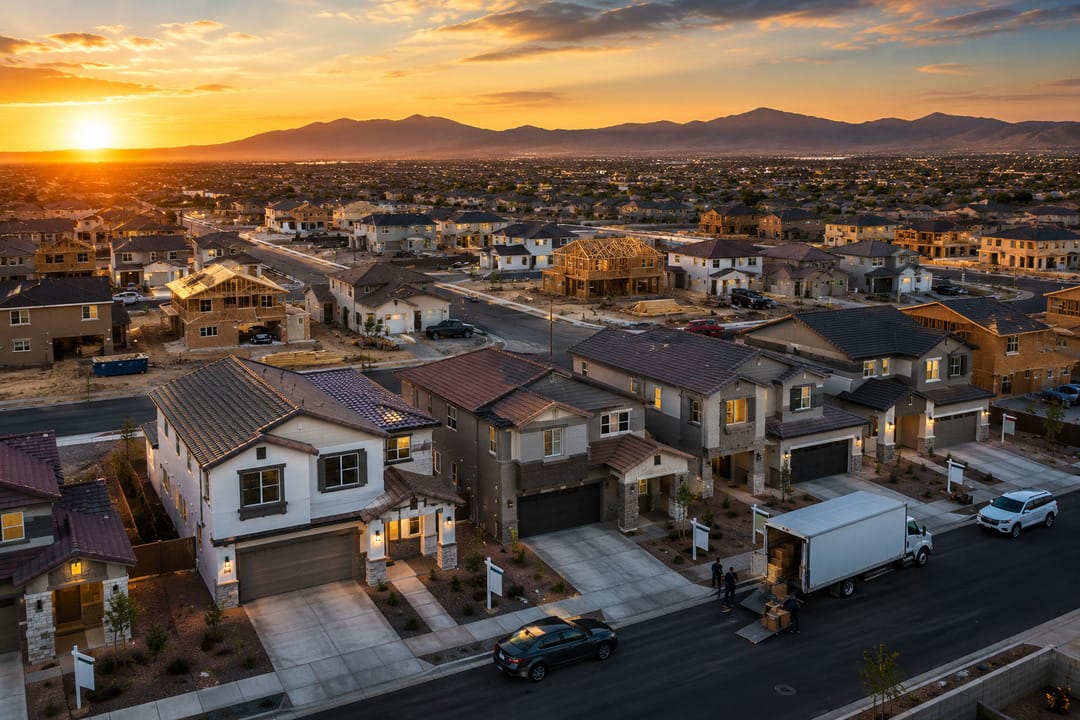
The latest new home sales 2026 numbers may look encouraging to buyers who have been waiting for prices to soften. A lower national median price, however, does not reveal how much a particular home will cost after upgrades, financing terms, taxes, association dues, and post-closing work are included.
New construction can still be the right choice, but buyers need to compare the complete package rather than the number displayed on a builder’s website. A broader new construction comparison can also help buyers decide whether builder warranties, newer systems, location, and completion timing outweigh the advantages of an existing home.
What the New Home Sales 2026 Numbers Actually Show
Sales of newly built single-family homes increased 1.6% from May to a seasonally adjusted annual rate of 628,000 in June. Sales were still 5.6% below June 2025, while the median new-home sales price declined 2.7% year over year to $398,300.
Those figures describe a national market, not the exact home a buyer will encounter. The June new-home sales report combines transactions from different regions, price ranges, development stages, and property sizes.
A lower median can result from builders selling more smaller or lower-priced homes. It does not necessarily mean that the same floor plan in the same development became 2.7% cheaper.
Buyers should also remember that the reported sales price may not capture every expense needed to make the property functional. Window coverings, fencing, landscaping, appliances, upgraded flooring, and additional storage can substantially change the move-in budget.
The market improvement is therefore a reason to investigate, not a reason to assume that new construction has become broadly affordable.
The Base Price Can Leave Out the Home Buyers Expect
A builder’s base price usually applies to a defined floor plan with standard materials, finishes, and structural features. The model home may show a more expensive version containing upgraded cabinets, lighting, flooring, countertops, built-ins, appliances, and outdoor improvements.
This creates a common gap between the home buyers tour and the home their base budget can purchase. The model demonstrates possibilities, while the price sheet identifies what is actually included.
Before comparing developments, buyers should request a written list of standard features. They should then identify which upgrades are necessary, which are cosmetic preferences, and which could be completed more affordably after closing.
The distinction matters because upgrade costs may be added to the purchase price and financed over the mortgage term. A seemingly manageable design-center choice can therefore affect both the cash required and the monthly payment.
Buyers should build their comparison around the finished livable price, not the least expensive configuration advertised online.
The following table shows where the final cost can separate from the headline price.
| Cost Area | What the Advertised Price May Include | What Buyers Should Verify |
|---|---|---|
| Interior finishes | Standard builder package | Upgrade prices and installation costs |
| Appliances | Limited or basic appliances | Refrigerator, washer, dryer, and ventilation |
| Exterior work | Basic grading or front landscaping | Fencing, backyard landscaping, drainage, and irrigation |
| Association costs | Current HOA dues | Initiation fees, future amenities, and expected increases |
| Financing | Promotional rate or credit | Loan type, points, fees, lock period, and qualification |
| Taxes | Estimate based on incomplete value | Taxes after the completed home is assessed |
| Completion | Estimated delivery period | Delay provisions, temporary housing, and lock extensions |
The strongest comparison uses the same assumptions for every property. Comparing one builder’s base price with another builder’s upgraded package will produce a misleading result.
Builder Incentives Need a Full Financing Comparison
A builder may offer a lower mortgage rate, closing-cost contribution, upgrade credit, or price reduction. Each incentive solves a different buyer problem.
A temporary or permanent rate reduction may help the monthly payment. A closing credit may preserve cash. A price reduction may improve the loan balance but provide less immediate relief than expected.
Buyers should not evaluate an incentive without reviewing the loan attached to it. Builder financing may be competitive, but the buyer still needs to compare the interest rate, annual percentage rate, discount points, lender fees, mortgage insurance, lock period, and total cash required.
The Loan Estimate breakdown explains where borrowers can compare loan terms, projected payments, closing costs, and services. The same document should be obtained from multiple lenders using comparable loan assumptions.
A large credit can lose value if the associated mortgage carries a higher rate or more expensive fees. Likewise, a low promotional rate may require the buyer to close by a particular date or use a specific lender and title provider.
The right question is not whether the builder is offering an incentive. It is whether the net financing result is better after every cost and restriction is included.
Taxes, HOA Dues, and Future Construction Affect Affordability
Property-tax estimates for a newly built home can be unreliable when the land was previously vacant or the completed property has not yet received its full assessment. The first tax bill after closing may not represent the long-term amount either.
Buyers should ask how the estimate was calculated and whether it reflects the completed home, current local tax rates, and any applicable exemptions. Assessment procedures vary by jurisdiction, so local verification matters.
HOA dues deserve the same attention. A low initial fee may cover only limited services while a development is being built. Dues can change as amenities open, maintenance responsibilities expand, or control transfers from the developer to homeowners.
Future neighborhood construction also carries practical costs. Buyers may live with noise, dust, heavy vehicles, incomplete roads, limited landscaping, and changing traffic patterns for months or years.
At the same time, buying early can provide more lot choices and access to introductory pricing. The tradeoff is accepting greater uncertainty about the finished neighborhood.
A buyer who works from home, expects immediate quiet, or plans to resell soon may evaluate that uncertainty differently from someone who intends to stay through the community’s full development.
Completion Stage Can Change Both Risk and Negotiating Power
Not every new home is purchased at the same point in construction. A buyer may choose a completed inventory home, a property already under construction, or a build that has not yet started.
Completed homes offer the clearest view of finishes, orientation, natural light, lot conditions, and surrounding construction. Builders may also be more motivated to sell inventory that is carrying financing and maintenance costs.
Homes under construction can provide some customization while offering a more predictable timeline than a build from the ground up. Buyers must still understand which selections remain available and what happens if materials or completion dates change.
A preconstruction purchase may offer the most choice, but it can also involve the most timing uncertainty. Mortgage-rate locks, lease expirations, moving arrangements, and the sale of another home may all depend on an estimated completion date.
The contract should explain deposits, selection deadlines, change orders, inspections, delays, warranties, and cancellation rights. These provisions depend on the builder, contract, and local law.
Buyers should not exchange due-diligence protection for a faster reservation without understanding exactly what they are giving up.
The Best New-Home Deal Survives the Complete Budget
New home sales 2026 data can reveal broad changes in demand and pricing, but it cannot determine whether one builder’s home fits a buyer’s finances. That decision requires a property-level review of the finished price, loan terms, taxes, HOA obligations, completion risk, and remaining cash.
A lower base price is valuable only when the necessary upgrades and ongoing costs remain manageable. Buyers who compare the complete ownership package are better positioned to recognize a real opportunity—and to walk away from a discount that disappears once the details are added.
FAQ’s
Does a lower median new-home price mean builders reduced prices everywhere?
No. A national median can change because of regional sales patterns, smaller homes, or a different mix of properties. Buyers must compare recent prices and incentives within the specific development.
Are builder mortgage incentives always better than outside financing?
Not necessarily. Compare the rate, annual percentage rate, points, lender fees, lock period, cash required, and restrictions against quotes from other lenders using similar loan assumptions.
Should buyers inspect a newly built home?
An independent inspection can still identify workmanship, installation, drainage, system, or safety concerns. Inspection access, timing, remedies, and contractual rights vary, so buyers should review their agreement carefully.