
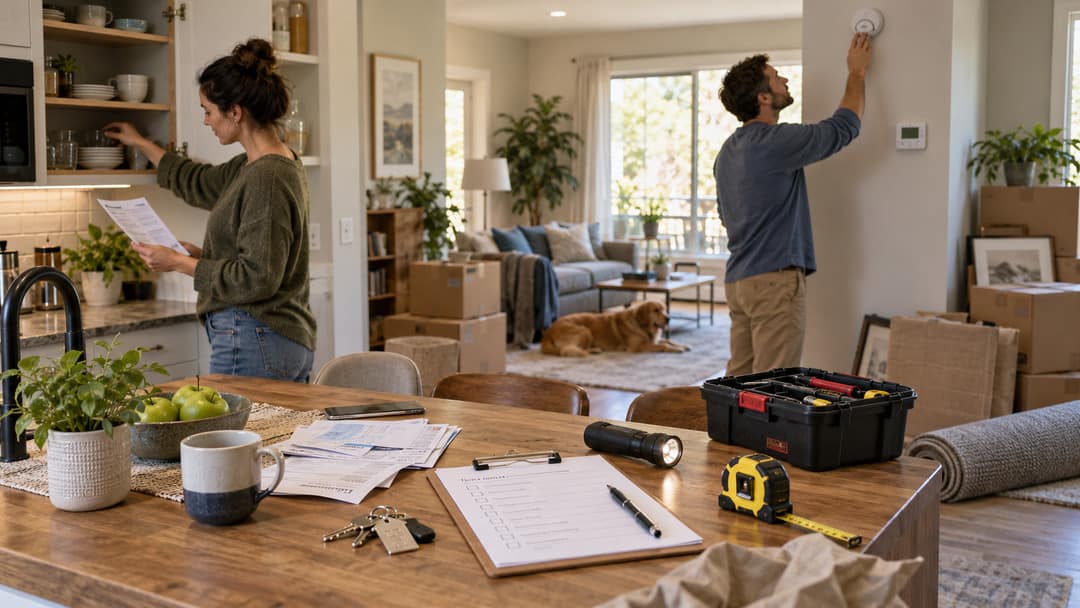
The first month in a new home is when the property stops being something you toured and starts becoming a system you use every day. That matters because slow leaks, uneven temperatures, odd electrical behavior, drainage problems, and appliance quirks often become easier to spot only after normal routines begin.
The goal for those first 30 days is not to fix everything at once. It is to build a reliable baseline: learn how the house behaves, document anything unusual, and separate normal maintenance from problems that deserve attention before they grow.
Use the First Month in a New Home to Establish a Baseline
A home inspection captures conditions at a specific point in time. Living in the property adds repeated observation. You start to notice which room runs warmer in the afternoon, whether a toilet occasionally runs, how quickly the yard drains after rain, and whether a breaker trips only when certain appliances are used together.
Patterns matter because isolated observations can mislead. One slow drain may be minor. Several slow drains over a few weeks may justify a closer look. One unusually high utility day may mean little, while repeated unexpected usage can point toward an efficiency or maintenance issue.
Keep a simple record during the first month. Note dates, locations, symptoms, photos, and any repair or service performed. A baseline turns memory into evidence, making future troubleshooting easier.
Check Water, Drainage, and Shutoff Points Before You Need Them
Water problems can remain quiet until damage becomes visible. During the first few weeks, look under sinks, around toilets, near the water heater, behind accessible appliances, and anywhere the inspection report mentioned previous moisture.
Pay attention to stains, damp cabinet floors, musty odors, soft materials, corrosion, or pressure changes. Federal home leak guidance recommends regular leak checks and explains how water-meter readings can help identify usage when no fixtures should be running.
Locate the main water shutoff and important fixture-level valves as well. Knowing where they are is different from trying to find them during an active leak. Do not force an unfamiliar or corroded valve; have questionable components evaluated.
Outside, watch where water moves after rain. Downspouts, grading, drains, and low areas near the foundation can reveal conditions that were difficult to judge during a dry showing. Water needs a predictable path away from vulnerable areas.
HVAC, Electrical, and Appliances Need Real-World Testing
Heating and cooling systems should be observed across ordinary use, not judged from one thermostat reading. Notice whether rooms heat or cool unevenly, whether the system cycles unusually, and whether filters are dirty or the replacement size is documented.
Record filter sizes, thermostat settings, equipment model numbers, and known service history. If utilities were arranged before possession, the guide to utility setup before moving also explains why early bills and service records are useful starting points.
Electrical behavior deserves similar attention. Flickering lights, frequently tripped breakers, warm outlets, burning odors, or inconsistent switches should not simply become accepted as “how the house works.” Some findings require a qualified electrician rather than homeowner experimentation.
Run appliances through normal cycles. A dishwasher may turn on but reveal drainage problems after several uses. A refrigerator may cool but run continuously. The goal is to learn performance under normal household demand.
Safety Devices Deserve a Day-One Check and a Monthly Habit
Smoke and carbon monoxide alarms should not be treated as background fixtures. Confirm where they are located, whether they respond to testing, and how old they are when that information is available.
Current smoke-alarm safety guidance recommends alarms in every bedroom, outside sleeping areas, and on every level of the home, along with regular testing and age-based replacement.
Check fire extinguishers, emergency lighting, garage controls, security devices, and fuel-burning equipment too. Safety systems need known status, not assumptions inherited from the previous owner.
Household members should also know where key shutoffs, exits, flashlights, and emergency supplies are located.
Build a 30-Day Checkup Around Systems, Not Rooms
A systems-based review is more useful than a long room-by-room list because one problem may affect several areas at once.
| System | What to check during the first month | Warning sign worth documenting |
|---|---|---|
| Plumbing | Faucets, toilets, drains, visible pipes, water heater | Recurring leaks, pressure changes, multiple slow drains |
| HVAC | Filters, thermostat, airflow, room comfort | Uneven temperatures, unusual cycling or noise |
| Electrical | Outlets, switches, breakers, lighting | Repeated trips, heat, odors, flickering |
| Appliances | Normal cycles and connections | Leaks, drainage failures, abnormal noise |
| Safety | Smoke/CO alarms, exits, emergency supplies | Failed test, missing device, unknown condition |
| Exterior | Gutters, downspouts, grading, drainage | Standing water or water moving toward the house |
Not every warning sign is an emergency. Use the checklist to identify what is recurring, what affects safety or water control, and what needs professional diagnosis.
Turn the First 30 Days Into a Maintenance Plan
By month’s end, homeowners should have more than a repair list. They should have a working picture of the property: filter sizes, shutoff locations, appliance information, recurring observations, utility baselines, service contacts, and maintenance priorities.
Separate findings into three groups: items to address now, items to schedule within the next few months, and items to monitor. That keeps cosmetic projects from competing with tasks that protect the home or reduce the chance of a larger failure.
Save photos, dates, invoices, manuals, warranty information, and notes about what changed after repairs. Good records reduce future guesswork and make recurring problems easier to explain to a contractor.
The first month in a new home should end with fewer unknowns than it began with. Homeownership becomes easier when normal behavior, weak points, and maintenance needs are understood well enough to act early rather than discover them during an emergency.
Frequently asked questions
What should a new homeowner check during the first month?
Focus on plumbing leaks, drainage, HVAC performance, electrical behavior, appliances, smoke and carbon monoxide alarms, shutoff locations, and exterior water movement. Document unusual patterns so they can be monitored or professionally evaluated.
Should I keep records of small problems after moving in?
Yes. Photos, dates, service invoices, manuals, filter sizes, and notes about recurring symptoms create a useful maintenance history and make it easier to identify whether a small issue is getting worse.
When should a new homeowner call a professional?
Seek professional help when a problem involves safety, recurring leaks, burning odors, repeated breaker trips, significant drainage issues, unusual HVAC operation, or anything you cannot safely diagnose or repair yourself.