

Choosing between a new construction vs existing home is less about whether one is better and more about which uncertainty you can manage. One option may offer fresh systems and modern design, while the other may offer a known neighborhood, visible condition, and a clearer closing timeline.
That decision matters when affordability is already tight and every upgrade, delay, repair, and monthly expense can affect the buyer’s comfort after closing. Before treating either property as the safer choice, the home inspection process should stay central to the comparison.
The Real Choice Is Control Versus Certainty
Before comparing finishes, floor plans, or neighborhood style, buyers should decide what kind of uncertainty they are willing to accept. New construction often gives buyers more control over design choices, but less certainty about timing, final costs, and how the completed community will function.
An existing home usually gives buyers more visible information upfront. The house is standing, the neighborhood is established, and the buyer can inspect the actual condition before closing. That does not remove risk, but it gives the buyer more immediate evidence to review.
The mistake is assuming that “new” means easier or that “existing” means more problematic. A newly built home can still involve delays, upgrade costs, unfinished punch-list items, or builder warranty questions. An older home can still be well maintained, fairly priced, and located in a neighborhood with proven long-term appeal.
The better decision starts with the buyer’s budget, deadline, repair tolerance, and need for predictability. Once those priorities are clear, the comparison between new construction and an existing home becomes less emotional and more practical.
New Construction vs Existing Home Starts With Timing
A new construction home may be finished, partly built, or still dependent on permits, materials, labor schedules, and builder timelines. That can make the purchase feel exciting but less predictable.
A completed builder inventory home may close more like an existing property. A home that is still under construction can shift dates because of weather, subcontractor delays, supply problems, inspections, or design changes.
An existing home usually gives buyers a clearer view of the move-in calendar. The property is already standing, the seller has a known timeline, and the buyer can often negotiate the closing date around financing, lease terms, school schedules, or relocation needs.
Timing should not be treated as a small detail. Buyers with limited flexibility may find that a reliable closing date matters more than choosing cabinet finishes or flooring colors.
The Purchase Price Is Only the Starting Number
New construction often attracts buyers because major systems are new. A newer roof, HVAC system, plumbing, electrical work, windows, and appliances can reduce immediate repair pressure.
That advantage can become less clear once upgrades are added. Builders may list a base price that excludes premium lots, landscaping, fencing, window coverings, appliances, irrigation, upgraded flooring, higher-end counters, or design-center selections.
Existing homes may show more wear, but their repair needs can sometimes become part of the negotiation. A buyer may request a price adjustment, seller credit, repair agreement, or other concession after inspections.
The stronger comparison is total ownership cost, not the headline price. Buyers should compare the final monthly payment, taxes, insurance, HOA dues, utilities, transportation, maintenance, expected repairs, and cash needed at closing.
| Decision Factor | New Construction Home | Existing Home |
|---|---|---|
| Timeline | May depend on builder progress and approvals | Usually offers a clearer closing schedule |
| Condition | New systems, but workmanship still needs review | Wear is more visible during showings and inspections |
| Customization | May allow finish and upgrade choices | Changes usually happen after closing |
| Location | Often in newer or developing communities | Often in established neighborhoods |
| Price clarity | Base price may exclude upgrades | Asking price may leave room for negotiation |
| Warranty | May include builder coverage | Protection depends more on inspection and contract terms |
| Neighborhood history | Limited resale and maintenance record | More visible tax, traffic, and resale patterns |
The table shows why neither choice is automatically cheaper. A newer home can cost more after upgrades, while an older home can cost more after repairs.
Warranties Help, but They Do Not Remove Risk
A builder warranty can make new construction feel safer, especially for buyers who want fewer early repair surprises. That protection has limits.
Builder warranties often cover certain permanent parts of the home, while separate home warranties are usually service contracts that may cost extra. Buyers should read the actual new-home warranty coverage before assuming every defect, appliance issue, or workmanship concern will be covered.
New homes can still have grading problems, drainage issues, incomplete work, cracked materials, poor installation, or systems that need correction after move-in. New does not automatically mean flawless.
Existing homes carry different risks. Age, past repairs, deferred maintenance, moisture, foundation movement, old wiring, aging roofs, and older mechanical systems can all affect safety and cost.
In both cases, buyers need independent verification. A new home should be inspected before closing, and an existing home should be reviewed for current defects and future replacement timelines.
Location Can Outweigh the Age of the House
New construction often comes with modern layouts, open kitchens, current finishes, and energy-conscious features. Those benefits matter, but they should not distract from the location.
Many new communities are still developing. Roads, traffic patterns, schools, stores, drainage, public services, and nearby construction may change after buyers move in. The area may become more convenient over time, but it may also bring noise, dust, delays, or uncertainty.
Existing homes often sit in neighborhoods with mature trees, established services, known commute routes, and clearer resale history. Buyers can visit at different times and see how the area functions during ordinary weekdays and weekends.
That does not make older neighborhoods perfect. Some may have limited parking, aging infrastructure, older utilities, or homes that need substantial updates.
The key is daily livability. A floor plan can sometimes be changed, but commute length, road noise, lot position, and neighborhood development are much harder to fix.
Financing and Incentives Need a Side-by-Side Review
Builders may offer closing cost help, rate buydowns, upgrade credits, or preferred-lender incentives. These can be useful, especially when they reduce cash needed upfront or improve the monthly payment.
Those offers should still be compared against outside loan options. A buyer may receive an incentive but face a higher purchase price, limited lender choice, different fees, or loan terms that are less favorable than they first appear.
A cleaner decision comes from reviewing loan estimates side by side before choosing the financing path. The same discipline applies when comparing builder incentives with seller credits on an existing home.
Existing-home purchases may offer negotiation room in different places. A seller might agree to repairs, reduce the price, contribute toward closing costs, or provide credits after inspection.
Buyers should compare final numbers, not sales language. The useful figure is the amount of cash required, the monthly payment, and the first-year expense load after realistic repairs, upgrades, taxes, insurance, and fees are included.
Choose the Tradeoff You Can Live With
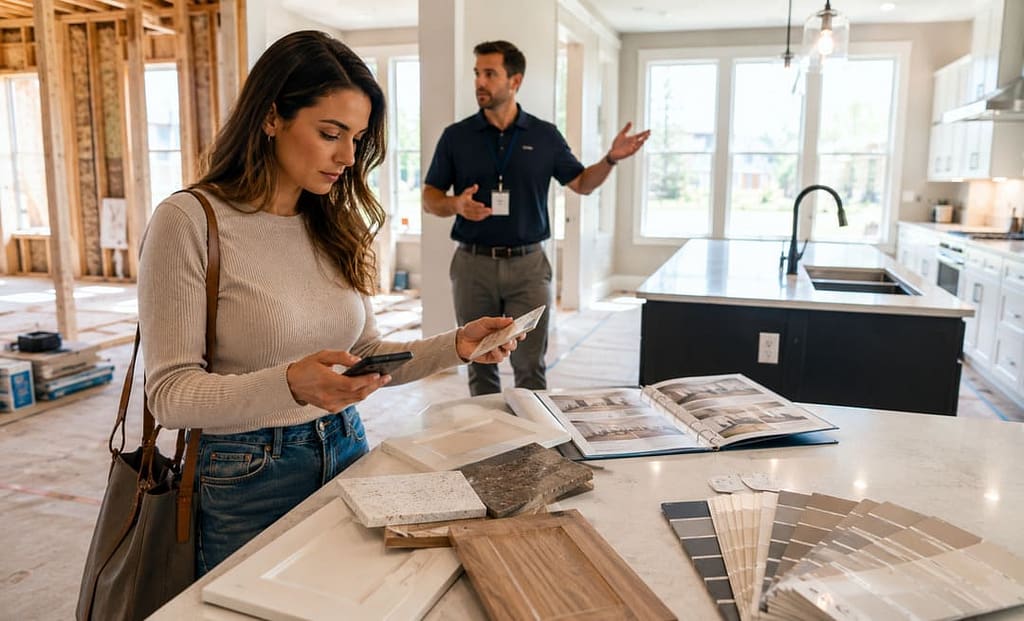
A new construction home may fit buyers who want modern systems, fewer early maintenance concerns, possible finish choices, and warranty coverage. It can work well when the buyer has schedule flexibility and understands exactly what is included in the final price.
An existing home may fit buyers who want a known location, faster occupancy, mature surroundings, visible condition, and stronger neighborhood history. It may also suit buyers who prefer negotiating based on inspection results instead of paying for builder upgrades.
The pressure point is not age. It is the risk profile behind each option. New construction can bring delays, upgrade costs, builder punch-list issues, and unfinished community features. Existing homes can bring aging systems, repair surprises, renovation needs, and maintenance that previous owners postponed.
Choosing between a new construction vs existing home becomes easier when buyers stop asking which one looks better and start asking which one still works after the full cost is counted. The right choice is the home that fits the budget, timeline, location needs, inspection results, and long-term comfort after the closing table.
FAQ’s
Is a new construction home always better than an existing home?
No. New construction may offer modern systems and fewer early repairs, but it can also bring delays, upgrade costs, and developing-neighborhood uncertainty. Existing homes may offer clearer location history and more visible condition.
Should buyers inspect a new construction home?
Yes. New homes can still have defects, incomplete work, drainage issues, or installation problems. A third-party inspection gives buyers a clearer record before closing or before warranty periods expire.
Which option is better for first-time buyers?
It depends on budget, timeline, cash reserves, location needs, and repair tolerance. First-time buyers should compare total ownership cost instead of choosing based only on age, finishes, or builder incentives.