

Let’s shatter a myth right away. That wide-eyed millennial clutching a latte and a dream? They don’t own the trademark on this term.
In the world of housing programs, age and past home ownership don’t always matter. You could be 45, have owned a condo in 2010, rented for a decade, and yet qualify. The key? A simple three-year gap without owning a home.
This eligibility criteria is not just about being new to homeownership. It’s about starting fresh in the market. Think of it as a financial reset button.
But there’s more to it. This definition often includes silent partners and strict rules. Income caps are low, credit scores are tough, and home prices limit where you can buy.
Knowing this official first-time homebuyer definition is your first step. It’s where the real game begins.
Conventional loan options
Forget what you thought about conventional mortgages. The 20% down payment rule is outdated. Now, you can get into a home with just 3% down. This is like getting a premium streaming service for a couple of years.
But, there’s a catch. You’ll need to pay Private Mortgage Insurance (PMI). PMI is like a cover charge for entering the club with only 3% down. It protects the lender, not you, and increases your monthly payment until you reach 20% equity.

Fannie Mae and Freddie Mac are the key players in these programs. They don’t lend directly to you. Instead, they create plans that banks, credit unions, and online lenders follow.
This system is interesting. You might think you’re shopping at different stores, but they all sell similar products. The key is finding the right one for you.
The Low-Down-Payment Lineup
Let’s look at the main players in first-time buyer loans. Each has its own unique features and the right candidate:
- Conventional 97 Mortgage: A simple choice. Just 3% down, available from most lenders. It’s like vanilla ice cream – reliable and widely available.
- HomeReady Mortgage: Fannie Mae’s smart choice. Also 3% down, but with more flexible income rules. Great for those with non-traditional income or boarder income.
- Home Possible Mortgage: Freddie Mac’s answer to HomeReady. Similar 3% down, but with slight tweaks. It’s like Coke vs. Pepsi – similar but different.
- HomeOne Mortgage: The exclusive club for true first-timers. Also 3% down, but with stricter “never owned a home” rules. This is for the virgin homebuyer, no previous ownership allowed.
Then, there are state-level programs with Fannie and Freddie branding. HFA Preferred and HFA Advantage loans work through state housing finance agencies. They often offer low down payments and additional assistance or better terms.
The Reality Check
That enticing 3% down payment isn’t magic. You’ll need good credit (usually 620+), reasonable debt-to-income ratios, and stable income. The conventional loan requirements might be more flexible than you think, but they’re not non-existent.
PMI is the trade-off, and it’s not cheap. On a $300,000 loan, you could pay $100-$150 monthly until you reach 20% equity. But, compare that to waiting years to save 20% down while rents and home prices climb.
The smart play? Run the numbers both ways. Sometimes paying PMI for a few years beats watching your dream home’s price increase by 10% annually while you’re saving.
Remember, you’re not applying to some government office window. You’re dealing with a bank representative who’s using these Fannie/Freddie blueprints. It’s off-the-rack financing, but with surprisingly customizable tailoring if you know what to ask for.
The conventional mortgage has evolved from an exclusive club to an accessible pathway. It just requires understanding the new rules of the game.
FHA, VA, and USDA loans
Conventional loans are like Wall Street bankers. FHA, VA, and USDA loans are like the government’s helpful uncles. Each has its own way of helping you buy a home.
The FHA loan is the forgiving uncle. He’s seen a lot and is willing to work with you. You can buy a home with as little as 3.5 percent down. But, your credit history is considered.
With FHA loans, you can have credit scores as low as 500. You pay a mortgage insurance premium. This premium is a trade-off for getting a second chance.
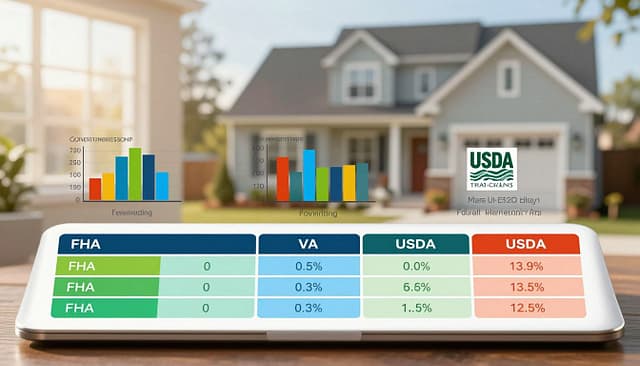
The VA loan is the patriotic uncle. It’s for those who served in the military. You can get a home with no down payment.
The VA loan has a funding fee. It’s a thank-you for your service. This benefit is for service members and their families.
The USDA loan is the rustic uncle. It also offers zero-down financing. But, you must buy in a rural area and meet income limits.
USDA loans are for homes in rural areas. They offer a chance to buy a home with space. If you prefer the countryside, this could be your best option.
The FHA 203(k) loan is for those who see the beauty in fixer-uppers. It lets you finance home repairs. You can buy and fix up a home at the same time.
| Loan Type | Minimum Down Payment | Credit Score Flexibility | Key Feature | Ideal Borrower Profile |
|---|---|---|---|---|
| FHA Loan | 3.5% | Very Flexible (500+ scores) | Government insurance for lower-risk approval | Buyers with limited savings or imperfect credit |
| VA Loan | 0% | Moderate Flexibility | No down payment for qualified veterans | Active military, veterans, and surviving spouses |
| USDA Loan | 0% | Moderate Flexibility | Rural development focus with income limits | Buyers in eligible rural areas with moderate income |
Choosing a government-backed loan is about finding the right fit. If you’re a veteran, the VA loan might be best. For country living, try the USDA loan. If you need credit forgiveness, the FHA loan could be your choice.
Understanding these options is key when looking at home financing. For more information, including how these government-backed loans compare to conventional loans, the right info is essential.
Each program has its own rules and timeline. But they all aim to help people buy homes. Sometimes, the most helpful uncles are those with government backing.
Comparing rates and terms
The cost of a mortgage isn’t just the interest rate. It’s also in the insurance premiums and long-term commitments. Think of it like a movie trailer versus the actual film. That 3.5% FHA rate might look great at first, but the mandatory mortgage insurance is a big deal.
When you compare mortgage rates across different mortgage programs, you’re only seeing half the picture. The monthly payment includes Private Mortgage Insurance (PMI) or Mortgage Insurance Premiums (MIP). Conventional PMI drops when you reach 20% equity. FHA MIP, on the other hand, is like a permanent guest who never pays for groceries.
Is that slightly lower FHA rate worth decades of insurance payments? Or does the conventional loan’s higher rate become the smarter play when you can ditch PMI in five to seven years? The answer depends on your personal math.
Consider this: FHA loans require upfront and annual MIP. Even with 10% down, you pay insurance for the loan’s life on most mortgages after June 2013. Conventional loans with less than 20% down also charge PMI, but you can request cancellation when you hit 78% loan-to-value ratio.
The PMI vs MIP debate isn’t just about monthly costs. It’s about flexibility and long-term strategy. With conventional, you’re racing toward a PMI-free finish line. With FHA, you’re stuck with MIP, no matter how fast you pay down principal.
What about zero-down options from VA and USDA loans? They’re not free passes – they come with their own fees. Sometimes, no down payment just means financing those costs into the loan amount, creating a higher starting balance.
The most affordable mortgage isn’t the one with the lowest rate. It’s the one with reasonable interest, manageable insurance, and loan terms that match your financial timeline. A veteran might find the VA loan’s lack of PMI makes its slightly higher rate a better deal. A first-time buyer with modest savings might accept FHA’s permanent MIP to get into the market now.
Your best move? Run the numbers over different time horizons. Calculate your true monthly cost including all insurance. Project when you might refinance. Tools at Ratehub can help you compare these scenarios side by side.
Remember: The flashiest rate might be a financial mirage. The sustainable payment is what keeps you in the home. Choose the mortgage that fits your wallet’s physiology, not just the one with the most attractive billboard number.
Best fits by buyer profile
So who are you, really? Your buyer profile isn’t just your credit score. It’s your job, your family history, your life story. This is where generic advice ends and strategic matchmaking begins.
Are you a teacher, police officer, or firefighter? The Good Neighbor Next Door program could cut a home’s price in half. That’s not a discount; it’s a plot twist. Recent graduates should check their state’s playbook. Programs like Ohio’s Grants for Grads offer serious down payment help for those fresh diplomas.
Is yours the first generation in your family to buy? States like Rhode Island and Michigan offer forgivable loans for first-generation buyers. It’s legacy building with a financial boost.
Forget traditional credit models? NACA (Neighborhood Assistance Corporation of America) works with buyers regardless of credit score, focusing on payment history. Prefer to work with your hands? Habitat for Humanity’s sweat equity model turns labor into a down payment.
Don’t overlook the quiet hero: the Mortgage Credit Certificate. This tax credit puts money back in your pocket yearly. It’s like a hidden subsidy for homeownership.
The landscape of first-time homebuyer assistance is vast. Your eligibility often depends on not owning a home in the past three years, as detailed in resources like NerdWallet’s qualification guide. Local programs add more options. In Florida alone, tens of thousands of buyers can access $35,000 in assistance through various grants and forgivable loans.
The right program doesn’t just give you keys. It aligns with your identity. Your profile is your passport. Now you know where it can take you.