

Tool Buying Criteria in 2026 are being shaped by a practical mix of price pressure, brand trust, reviews, compatibility, and project risk. For homeowners, the useful question is not simply which drill, saw, wrench set, or accessory looks best on the shelf. It is whether the tool fits the work that will actually be done, whether it can be used safely, and whether ownership makes more sense than renting or hiring help.
The available 2026 data points to a more selective buyer. Homeowners are still purchasing tools and accessories, but the decision appears less casual than it may have been during heavier project cycles. That makes a written buying standard useful, especially for owners who are balancing repairs, remodels, outdoor projects, and everyday maintenance without turning a garage into an expensive storage area.
How 2026 Tool Buying Criteria Shifted
Tool Buying Criteria Start With Price
Baymard Institute reported in its April 8, 2026 home and hardware research that among 3,023 U.S. adults who had bought home or hardware products online in the prior three months, 53% said price was the most important factor in their most recent purchase, followed by brand at 42%. User reviews influenced 34%, location convenience 26%, speed of delivery 25%, compatibility information 24%, and warranty or returns 22%, according to Baymard home and hardware research.
Those numbers support a cautious reading: price leads, but it does not stand alone. A low price can be reasonable for a tool used once on a low-risk task. It can be a false economy for a tool that affects safety, precision, or repeat work. Brand also matters because buyers use it as a shortcut for expectations about fit, service, battery systems, accessories, and whether replacement parts or matching items will be easy to find.
These Tool Buying Criteria also show why online shopping information has to be clear. Compatibility details, return terms, delivery timing, and user reviews can change the buying decision before a homeowner ever touches the product. That is especially true for battery platforms, attachments, blades, chargers, fasteners, and other items where a small mismatch can make a purchase useless.
Selective Buying Is Part Of The 2026 Pattern
HIRI reported that 28% of homeowners made tool and accessories purchases in Q1 2026, down from 36% in Q1 2025. Its Q1 2026 reporting also said price and quality have alternated as top home improvement product priorities over recent quarters, with durability close behind. Big-box retailers accounted for 66% of product purchases, while online-only channels accounted for 24%, based on HIRI Q1 2026 project data.
That pattern suggests homeowners are not just chasing the cheapest item. They appear to be weighing whether a purchase is worth making at all. A tool that sits unused after one afternoon has a different cost than its shelf price. Storage, batteries, replacement consumables, repair limits, and safe operation all belong in the decision.
Price Is Only One Part Of The Decision
Separate Purchase Price From Ownership Cost
A basic tool budget should separate the sticker price from the full cost of owning and using the item. For battery-powered tools, that may include batteries, chargers, cases, compatible accessories, replacement blades, bits, filters, or safety gear. For hand tools, it may include size range, grip comfort, corrosion resistance, storage, and whether the tool can handle the expected frequency of use.
The practical test is frequency. A homeowner who will tighten a few cabinet pulls may not need the same tool quality as someone preparing for repeated deck, fence, or workshop tasks. A rarely used low-risk tool can be a budget purchase if it performs the job safely. A frequently used tool should be judged more heavily on durability, comfort, and predictable performance.
For a related buying framework, this site’s discussion of DIY tool selection criteria is useful because it starts with project frequency, safety, budget limits, and repair needs rather than brand preference alone.
Reviews Should Be Read For Patterns
User reviews influenced 34% of purchases in Baymard’s online-buyer research, but reviews need filtering. A five-star average is less useful than repeated comments about the same failure, confusing setup, battery life, poor accessory fit, weak packaging, or responsive support. Homeowners should look for patterns across several reviews, not one dramatic complaint or one unusually glowing account.
Reviews are also more useful when they match the intended use. A homeowner repairing trim has different needs than someone cutting thick framing lumber. A renter assembling furniture has different risk exposure than an owner working around exterior masonry, plumbing fixtures, or older building materials. The closer the review context is to the planned task, the more weight it deserves.
Compatibility, Access, And Returns Reduce Waste
Battery Systems And Accessories Deserve A Check
Compatibility information influenced 24% of Baymard’s surveyed online purchases, which fits the way modern tools are sold. Many homeowners are no longer buying one isolated item. They are buying into a battery platform, blade size, bit standard, charger type, dust-collection connection, or accessory family. A wrong fit can turn a good price into a return trip.
Before buying, homeowners should confirm the model number, battery voltage or platform, charger match, accessory size, and any listed limitations in the manufacturer’s documentation. That is not a step to rush, especially for sale items, bundles, and open-box products. If the tool will be used with equipment already owned, the purchase should be checked against that equipment rather than against a general product category.
Store Access Still Matters
HIRI’s Q1 2026 data showing big-box retailers at 66% of product purchases helps explain why location convenience remains relevant. For many homeowners, tools are bought close to the time a repair is needed. Being able to compare sizes, check the feel of a handle, ask about returns, or replace a missing accessory quickly can matter as much as a small online price difference.
Online-only buying can still work well for planned purchases, specialty accessories, or replacement items with verified model numbers. The risk rises when the homeowner is unsure about compatibility or needs the tool for a time-sensitive repair. Return rules deserve a direct check before purchase because tool returns may vary by condition, packaging, batteries, fuel exposure, or store policy.
If home upkeep also extends to a weekend property, related home and lifestyle planning at Weekender Villas can provide valuable insights. Their guidance helps owners consider maintenance needs beyond a primary residence. The same buying discipline applies: do not duplicate tools for a second location unless the project frequency and safety case justify it.
Match The Tool To The Project Risk
Some Projects Should Shift Toward Professional Help
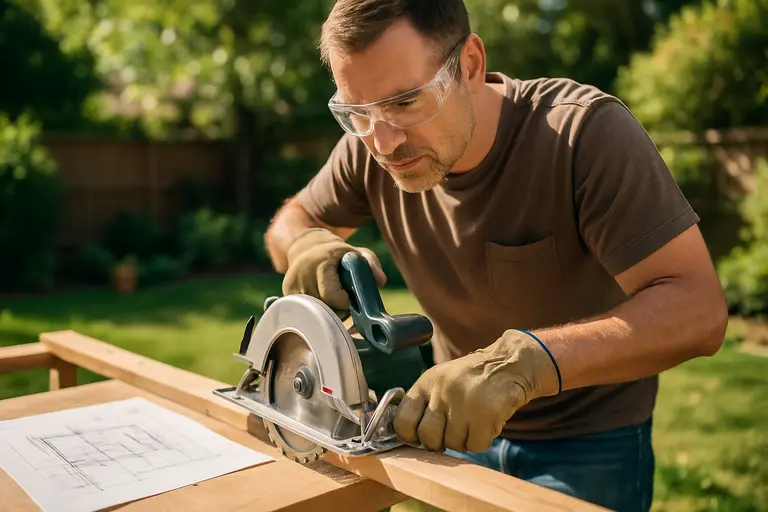
Tool buying should not become a way to push into unsafe work. Electrical, gas, major plumbing, structural changes, roof work, extensive ladder work, and tasks involving unknown hazards should be screened carefully before any purchase. In many cases, a qualified professional is the safer choice, and the homeowner’s role may be limited to planning, clearing access, choosing finishes, or documenting the issue.
HIRI’s Q1 2026 research reported that 39% of home improvement work was pure DIY, while 46% mixed DIY with contractor support. It also reported that access to specialized tools or equipment was cited by 43% as a reason for hiring professionals. That is a useful signal. If the only reason to buy a tool is to attempt a high-risk task once, the better decision may be to pay for skilled help rather than absorb tool cost and safety exposure.
Hybrid planning can control cost without creating unnecessary risk. A homeowner might handle low-risk preparation, measuring, cleanup, painting, or fixture selection while leaving regulated or hazardous work to licensed trades where appropriate. The tool list then becomes smaller and more realistic.
A Practical Screening List
Before buying, homeowners can use a short screen to avoid regret purchases. The goal is not to slow every small repair. It is to make the decision visible before money is spent.
- Frequency: Will this tool be used more than once or twice in a reasonable period?
- Risk: Could misuse cause injury, fire, water damage, structural damage, or code issues?
- Compatibility: Does it match existing batteries, accessories, materials, and the exact task?
- Quality need: Is durability necessary because the tool will be used repeatedly or under load?
- Storage and care: Is there a safe dry place to keep it, charge it, and protect accessories?
- Alternative: Would renting, borrowing, or hiring a professional make more sense?
This kind of screen keeps the purchase tied to the home rather than to the attraction of owning new equipment. It also helps renters and new homeowners avoid filling limited storage with tools that do not match their actual maintenance responsibilities.
Applying Tool Buying Criteria At Home
Build A Small Core Kit Before Expanding
Most households benefit from a modest, safe core kit before moving into specialized power tools. The exact kit depends on the property, lease rules, homeowner association rules, and repair comfort level, so it should be built around real tasks rather than a generic shopping list. Measuring, tightening, hanging light items safely, assembling furniture, and basic maintenance usually come before specialty cutting, grinding, demolition, or systems work.
Tool Buying Criteria work best when they are written down and reused. Start with the project, decide whether the work is safe to do without professional help, identify the exact tool or accessory required, then compare price, brand, reviews, compatibility, convenience, and returns. If one of those checks fails, waiting is often better than buying under pressure.
The 2026 data supports a careful buyer: price matters most in Baymard’s online-purchaser survey, but brand, reviews, compatibility, store access, delivery, and returns all influence decisions. HIRI’s Q1 2026 data points to more selective tool purchasing and a strong place for big-box retailers, while its DIY mix data shows that many homeowners are combining their own work with contractor support. For practical homeownership, that is the right balance: buy tools that fit safe, repeated work, and bring in qualified help where the task exceeds the household’s equipment, training, or risk tolerance.