
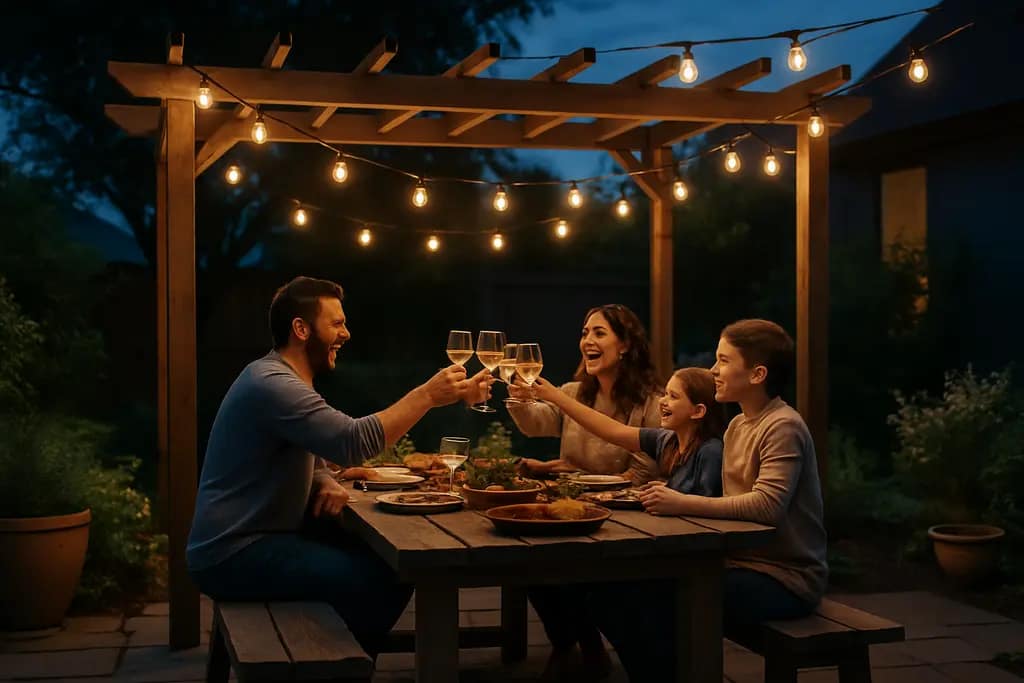
Backyard renovation decisions are shifting toward daily use, and outdoor lighting is a clear part of that shift. The strongest recent data does not describe lighting as a small decorative add-on. It shows homeowners using light to make seating areas, lounge zones, paths, and entry points more useful after sunset.
That matters for owners planning a remodel and for buyers judging whether a yard will fit normal routines after closing. A bright photo can make a patio look finished, but the more practical question is whether the lighting plan supports safe movement, comfortable seating, and reasonable maintenance. Buyers comparing outdoor features with broader home priorities can also find useful home-buying resources at J. Siemering Homes with insightful tips and guidance.
Why Outdoor Lighting Is Moving Up The Renovation List
What Outdoor Lighting Data Shows
The 2026 U.S. Houzz Outdoor Trends Study, published on June 2, 2026, surveyed 1,191 U.S. homeowners who had recently planned or completed outdoor or exterior renovations. Among renovated lounge areas, 66% included lighting to extend usability into evening hours, according to the 2026 Houzz study. The same study reported that 83% of renovated outdoor spaces had a lounge or seating area, while 71% of renovated outdoor spaces with seating included a sofa or lounge chair.
Those figures point to a practical connection: people are not just installing lights around unused yard space. They are creating places to sit, talk, eat, and relax, then adding light so those areas work after daylight fades. In that context, outdoor lighting is no longer separate from the main renovation plan. It is part of how the finished space functions.
Comfort Features Need Usable Hours
Seating, lounge furniture, and outdoor gathering areas can lose much of their value if they are comfortable only during daylight. Evening use is especially relevant during warmer months, when homeowners may avoid the yard during peak sun and return later in the day. Lighting does not create comfort by itself, but it can support the seating and circulation plan that the homeowner already paid to build.
The 2024 Houzz Outdoor Trends Study was fielded from May 25 to June 5, 2024. Among homeowners with outdoor system projects, 78% upgraded lighting. The same research reported that string or bistro lights appeared in 44% of those projects and porch sconces in 37%, based on the 2024 Houzz outdoor study. That suggests homeowners are mixing practical fixture types rather than relying on one bright source to cover the whole yard.
Planning Outdoor Lighting Around Use And Safety
Map Activities Before Fixtures
Outdoor lighting should start with the way the space will be used. A patio used for dinner needs different light placement than a walkway from the driveway, a stair run, or a quiet seating area. The safer planning sequence is to identify the activity first, then choose the fixture type and placement that support it.
A useful plan separates the yard into zones without overcomplicating the project. Homeowners can review the main places people move, pause, sit, and enter the house before deciding how many fixtures are needed. The goal is not maximum brightness. It is controlled light where people actually need it.
- Paths and steps: light should help people see changes in level and direction.
- Seating areas: light should support conversation without shining directly into eyes.
- Doors and gates: light should help with keys, handles, and safe entry.
- Cooking or serving zones: light should improve visibility without creating glare.
- Edges and transitions: light should make changes between surfaces easier to read.
Set Limits On DIY Work
Low-voltage kits and plug-in products can make small updates look approachable, but homeowners should still follow manufacturer instructions and avoid improvised wiring, overloaded outlets, or temporary cords used as permanent solutions. Any new hardwired fixture, new exterior circuit, panel work, or work near unknown wiring should be handled by a qualified professional.
This is a safety issue, not just a design issue. Exterior fixtures face moisture, temperature changes, and physical wear. Poor installation can create shock, fire, or tripping hazards. A contractor or licensed electrician can also help identify where permits, weather-rated components, ground-fault protection, or other local requirements may apply. Homeowners should verify those requirements locally rather than assuming one rule applies everywhere.
Match Lighting Scope To Renovation Scope
Small Updates Vs Larger Projects
A simple seating refresh may need only modest changes, while a rebuilt patio, new lounge area, or larger exterior project may require a coordinated lighting plan. The 2024 research noted that 62% of outdoor renovation projects involved six or more light fixtures. That does not mean every yard needs that many fixtures, but it does show that lighting often becomes a system rather than one product added at the end.
For homeowners already changing the layout, it is usually better to think about fixture locations before hardscape, planting beds, posts, or seating are finalized. Planning late can lead to awkward fixture placement, exposed cords, or paying for rework. For a related renovation planning angle, see this discussion of outdoor living spaces and how comfort, shade, lighting, and professional work fit together.
Control Glare And Maintenance
Good lighting is not the same as bright lighting. Glare can make stairs, paths, and seating areas harder to use because the eye adjusts to the brightest source. Light aimed toward faces, neighboring windows, or the sky can also reduce comfort even when the fixture looks attractive in a product photo.
Maintenance deserves attention before purchase. Homeowners should ask how bulbs or integrated fixtures are replaced, whether the fixture is rated for exterior use, how controls are managed, and whether the system can be serviced without disturbing finished surfaces. If a renovation includes multiple fixture types, the owner should also understand which parts are plug-in, low-voltage, solar, battery-powered, or hardwired.
How Buyers Should Read A Lit Backyard
Do Not Confuse Atmosphere With Condition
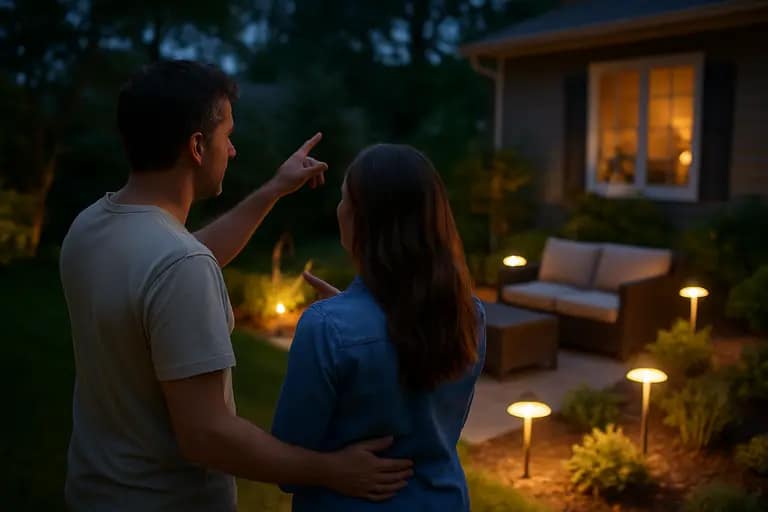
For home buyers, a lit backyard can create a strong first impression, but it should not replace normal due diligence. Attractive lighting does not prove the outlets, fixtures, wiring, switches, timers, or controls are in good condition. Buyers should ask what is included in the sale, what is permanently installed, and whether any systems are leased, temporary, damaged, or excluded.
If a showing occurs during daylight, buyers may not see how the yard performs after dark. If practical within the purchase process, they can ask for fixture details, seller disclosures, invoices, permits if relevant, and photos of the space at night. A home inspector may comment on visible defects, but specialized electrical concerns should be directed to a qualified electrician.
Ask About Operation Before Making An Offer
A lighting plan is more useful when the buyer understands how it works. Are the fixtures controlled by wall switches, timers, smart controls, photocells, or separate remotes? Are any areas dependent on extension cords or portable products? Are replacement parts easy to identify? These questions can reveal whether the setup is a durable improvement or mostly staging.
Buyers should be cautious about assigning a precise resale value to lighting alone. The research supports strong homeowner interest in lit outdoor areas, but it does not prove that every project pays back its cost in a sale. Condition, neighborhood expectations, installation quality, and the rest of the property still matter.
Outdoor Lighting For Usable Backyards
The recent data supports a clear planning lesson: lighting is becoming part of how homeowners make outdoor areas usable, not just how they make them look finished. The strongest case for investment is functional. A backyard that has seating, safe circulation, controlled glare, and appropriate fixtures can serve the household for more hours of the day.
The cautious approach is to plan use first, then match fixture type, placement, wiring method, and maintenance needs to that plan. Keep high-risk electrical work with qualified professionals, avoid temporary fixes as permanent installations, and evaluate lighting as part of the full renovation budget rather than as an afterthought. Done that way, the yard is more likely to support real daily use instead of just looking complete in listing photos.