

A strong stream from the kitchen faucet can make buying a house with a well feel straightforward. Before offering, though, you need evidence about three separate things: water quality, available supply, and equipment condition. A reassuring answer about one leaves the other two unresolved.
That distinction helps separate well concerns from ordinary home plumbing problems. Your immediate task is to identify the records, specialists, and testing arrangements needed while you can still build appropriate review time into the purchase.
Start buying a house with a well by requesting its history
Ask for the well log, sometimes called a drilling or construction report, along with available permits, laboratory results, and service invoices. Request installation dates for the pump, pressure tank, and treatment equipment.
Have the seller identify the well’s location and explain whether it serves only this property. If another household shares it, request the written agreement and have an attorney clarify maintenance costs, access, and water-use rights.
Read the records as a timeline. Were repeated water tests followed by disinfection? Was a pump replaced after pressure complaints? Ask about seasonal shortages, interrupted supply, flooding, and any water delivered from elsewhere.
Missing paperwork creates an unanswered question. Ask whether the original contractor or relevant state or local agency holds records. A newer pump does not, by itself, establish the condition or production of the well supplying it.
Set the water-testing scope before booking an appointment
Ask a state-certified drinking-water laboratory and the local health department which tests suit the property. Give them available results and information about nearby land uses, previous flooding, and installed treatment equipment.
The CDC’s well-water testing guidance recommends annual testing for total coliform bacteria, nitrates, total dissolved solids, and pH, with additional testing based on local concerns. That routine baseline should inform the conversation; it does not establish that every purchase needs an identical testing package.
Request a current report identifying the sample location, collection date, substances tested, and results. An old report can provide history, but it describes an earlier sample.
Ask the laboratory whether samples should be collected before treatment, at the drinking-water tap, or both. Follow its collection instructions and disclose recent disinfection or repairs so it can advise on timing.
Keep sample conditions documented. A result from treated kitchen water answers a different question from one collected before the treatment system.
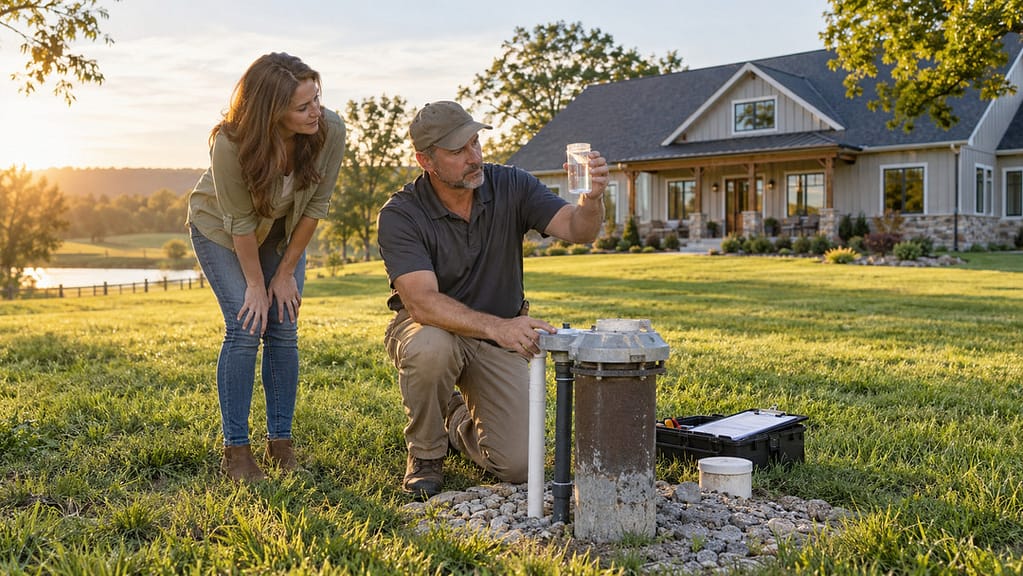
Separate water quality from supply and equipment condition
A laboratory result cannot tell you whether the household will have enough water when showers, laundry, and other demands overlap. Likewise, a brief faucet check cannot establish sustained well performance.
Ask a qualified well contractor what testing would meaningfully assess this system’s output and limitations. Explain your expected household use, including irrigation or other substantial demands, rather than relying only on the seller’s experience.
Professional well-system inspection guidance describes checks of flow, pump performance, pressure equipment, and water levels where possible. Request a written scope and report that identify what was evaluated and what remains unknown.
Use these distinctions when comparing inspection proposals:
| Review | Main question it addresses | What it does not establish |
|---|---|---|
| Construction records | How was the well originally built? | Its present condition |
| Laboratory testing | What was detected in the sample? | Reliable water quantity |
| Output assessment | How does supply perform during testing? | Performance in every season |
| Equipment inspection | What condition are accessible components in? | Drinking-water safety by itself |
| Treatment review | What equipment is installed and maintained? | Removal of every possible contaminant |
The useful outcome is three separate answers about quality, supply, and condition. Ask the general home inspector which well-related services are included; arrange additional evaluation wherever the written scope leaves a gap.
Examine the treatment system and its ongoing demands
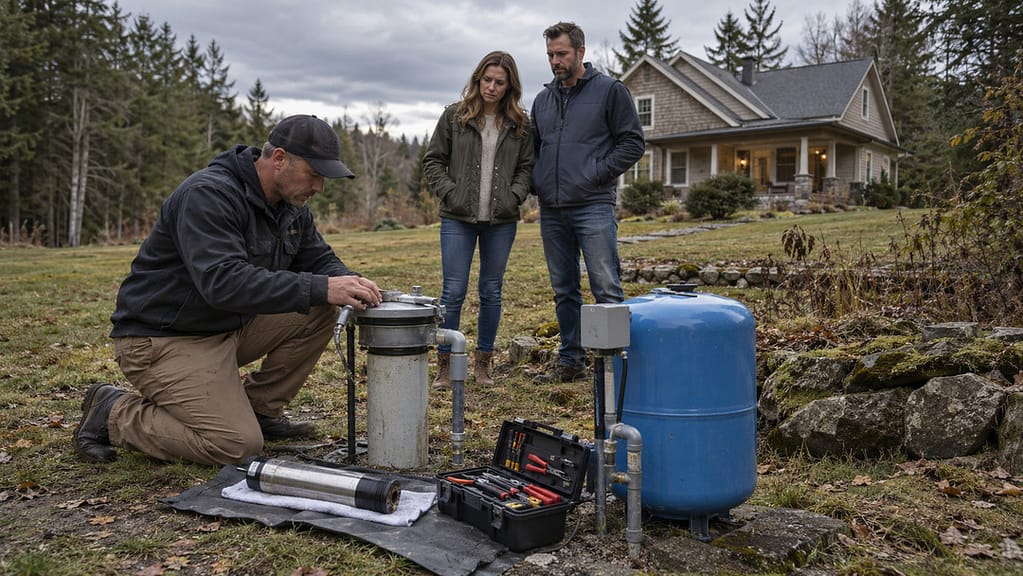
During the specialist visit, ask about the well cap, visible casing, drainage around the wellhead, and access for servicing. Have the contractor identify nearby conditions that deserve review against applicable local requirements.
Then inventory the equipment inside the house. Ask what each filter, softener, or disinfection device is intended to address, why it was installed, and who maintains it.
Request model information, service records, replacement schedules, and operating instructions. Confirm whether equipment is owned or rented and whether it is included in the sale. Ask a treatment professional to explain how its performance should be verified.
Obtain property-specific estimates for recommended repairs and routine servicing. Budget for testing, consumables, electricity, and eventual equipment replacement. Without that detail, the absence of a municipal water bill tells you little about the cost of ownership.
Follow up on repeat problems before deadlines arrive
Repeated contamination findings, recurring pressure loss, recent unexplained disinfection, or conflicting reports deserve further investigation. Ask what caused the problem, what work addressed it, and what evidence would demonstrate that the response worked.
If testing identifies a health concern, seek direction from the local health department about safe water use and the next steps. Avoid accepting a general promise that a filter will solve whatever the laboratory finds.
Where the property also uses septic, arrange a separate review of that system. Ask the professionals whether its location or condition raises concerns for the well.
Allow time for diagnosis, written estimates, corrective work, and any recommended retesting. A repair invoice alone may not answer whether water quality or supply has improved.
Put the unresolved checks into your offer plan
Before submitting an offer, ask your agent or attorney how the contract should address well testing, specialist access, records, and review deadlines. Clarify your options if results are unsatisfactory or arrive late; those options depend on the agreement and applicable rules.
Tell your lender the property uses a private well and request its documentation requirements early. Confirm laboratory turnaround times and contractor availability before agreeing to a schedule.
Buying a house with a well can be a sound choice when the evidence supports your household’s needs. Before committing, know what has been verified, what still needs testing, and what ownership will require. That preparation turns a working faucet into a much better-informed purchase.
Frequently asked questions
Does clear well water mean it is safe to drink?
No. Appearance alone cannot establish drinking-water safety. Use appropriate laboratory testing and ask the local health department which contaminants matter in that area, even when the water looks, smells, and tastes normal.
Who should pay for the well inspection and water tests?
Payment should be addressed during negotiations and documented in the purchase agreement. Ask who will select the providers, receive the complete reports, and pay for any additional evaluation or retesting.
Should missing well records stop the purchase?
Not automatically. First ask the contractor and relevant public agency whether records exist. Then have a qualified well professional explain what inspection and testing can verify, and what uncertainty remains.
Does a general home inspection include the well?
Do not assume it does. Ask the inspector for a written scope identifying any included well checks. Water sampling, output testing, and detailed equipment evaluation may require separate arrangements with qualified providers.
What should buyers ask about existing water-treatment equipment?
Ask which water problems the equipment addresses, whether it is owned or rented, and whether it stays with the house. Request service records, maintenance instructions, and estimates for ongoing supplies and servicing.