
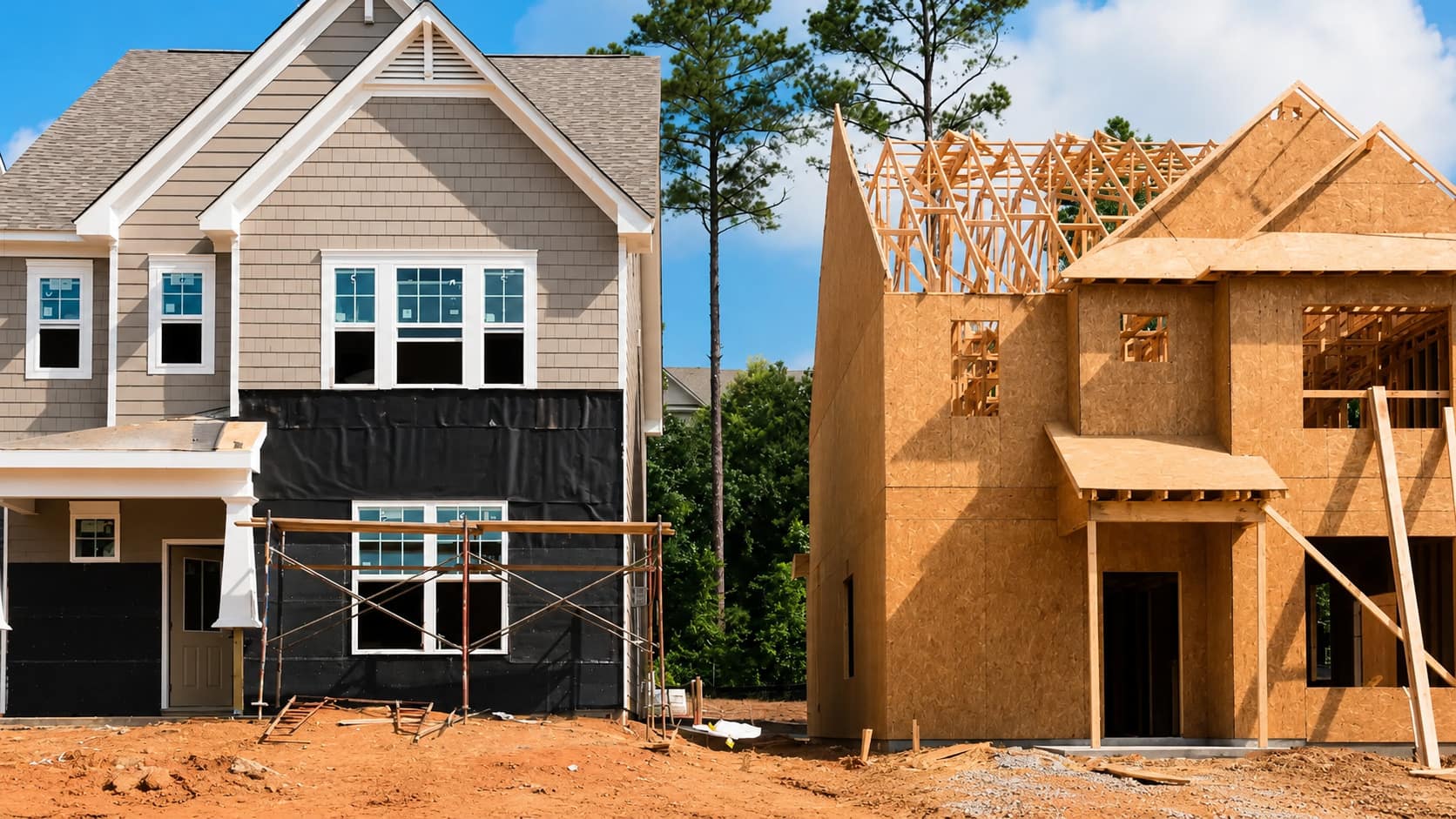
A buyer comparing new construction vs existing homes in 2026 is facing a less obvious decision than “new versus old.” New homes can come with builder incentives, modern systems, and fewer immediate repairs, while existing homes may offer established neighborhoods, different locations, and more room to negotiate. The better choice depends on what the buyer values after the closing table—not simply what looks like the better deal on the listing.
That question matters in Southern Indiana because buyers have more inventory to evaluate, but the numbers do not tell the whole story. Current Southern Indiana Realtor Association data shows inventory has increased substantially year over year, while existing homes remain a significant part of the available market. Southern Indiana housing market data Buyers therefore have an opportunity to compare properties more carefully instead of treating new construction as automatically superior or assuming an older home is automatically cheaper.
The price tag is only the beginning
The biggest mistake in comparing new construction with an existing home is stopping at the listing price.
A new home may have a base price that does not tell the entire financial story. Lot premiums, upgraded cabinets, flooring, lighting, appliances, landscaping, fencing, and other selections can push the final price beyond the initial figure. Buyers should ask for a detailed breakdown of what is included before comparing the home with a resale property.
Existing homes have a different cost profile. The purchase price may be easier to understand, but buyers need to account for the property’s condition. A lower-priced house that needs a roof, HVAC system, drainage work, or extensive electrical repairs can quickly lose its apparent advantage.
The real comparison is total ownership cost, not simply the number on the listing.
That is particularly important when financing costs are already affecting affordability. A buyer should compare the expected monthly payment, cash required at closing, immediate repairs, insurance, taxes, HOA costs when applicable, and likely maintenance needs for both choices.
New construction vs existing homes: where the trade-offs really appear
The differences become clearer when buyers compare the categories that will affect daily life after moving in.
| Decision factor | New construction | Existing home |
|---|---|---|
| Upfront cost | May include builder incentives but upgrades can increase the final price | Purchase price is usually easier to evaluate, but repairs may add cost |
| Maintenance | Generally fewer immediate maintenance concerns | Condition varies widely by age and upkeep |
| Warranty | Builder warranty may cover qualifying construction items | Major systems may be outside warranty unless separately covered |
| Customization | Buyers may select finishes on eligible builds | Changes generally happen after purchase |
| Location | Often concentrated in newer developments | Greater variety of established neighborhoods and locations |
| Resale potential | Depends on neighborhood growth and future competition from other new builds | Established neighborhood history can provide useful market context |
Neither side wins every category. A buyer who wants predictable maintenance may place a higher value on newer systems. Someone who prioritizes an established neighborhood, mature landscaping, or a particular location may find an existing property more compelling.
Builder incentives can change the math
One of the more interesting developments in the 2026 housing market is that builders are increasingly competing on the overall offer rather than relying only on the headline price.
Realtor.com reported that 20% of new-construction listings received price reductions in the second quarter of 2026, compared with 18.6% of existing homes. Its research also found that the national new-construction price premium had risen to 10.3% as existing-home prices softened. 2026 new-construction market data
That creates an important opportunity for buyers, but incentives need to be evaluated carefully.
A builder might offer help with closing costs, a mortgage-rate buydown, upgrades, or other concessions. The most valuable incentive depends on the buyer’s financing and how long they expect to own the property.
A lower interest rate for the first few years can affect monthly affordability differently from a permanent price reduction. An upgraded package may be attractive but less valuable than a credit that addresses a buyer’s actual cash-to-close constraint.
The right question is not “What incentive are they offering?” It is “What does the complete deal cost me?”
Maintenance and warranties change the ownership experience
Maintenance is one of the strongest arguments for buying new, but buyers should not confuse “new” with “maintenance-free.”
A new house still has heating and cooling equipment, plumbing, appliances, exterior components, landscaping, and other systems that require care. Construction defects can also occur, which makes understanding the builder’s warranty terms important.
An existing home presents the opposite challenge. Its systems have a history, and that history can be valuable if properly documented. A well-maintained 15-year-old house can be a better practical choice than a poorly maintained property that happens to be newer.
This is where inspection results matter. For an existing home, an inspection can help identify the difference between cosmetic aging and expensive underlying problems. For new construction, an independent inspection can also provide another set of eyes before closing.
Buyers considering an older property should also think about whether manageable cosmetic work could turn an otherwise suitable home into a better long-term fit. Small updates can sometimes be more predictable than taking on a major renovation immediately after purchase. small-scale renovation guidance
Southern Indiana buyers should look beyond the house itself
A house does not exist in isolation. Location can ultimately matter more to resale than whether the structure was built this year or several decades ago.
For Southern Indiana buyers, that means comparing commute patterns, nearby services, schools where relevant, neighborhood development, lot characteristics, taxes, HOA obligations, and the supply of competing homes.
New developments can offer attractive layouts and newer infrastructure, but buyers should consider how much additional construction is planned nearby. A neighborhood with many unsold or future lots can create more direct competition when an owner eventually sells.
Existing neighborhoods bring a different set of considerations. Mature trees, established streets, completed surrounding development, and known neighborhood patterns can provide advantages that are difficult to replicate in a brand-new subdivision.
Resale value starts with demand, and demand is heavily influenced by location and the alternatives buyers will have when it is time to sell.
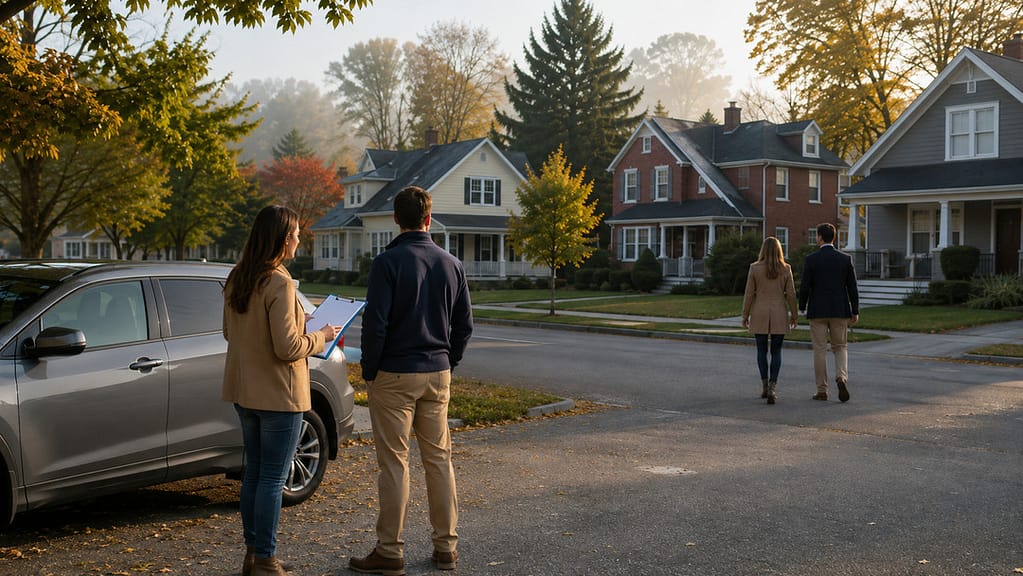
The smartest choice depends on the next five years
The best way to decide between new construction and an existing home is to picture the ownership period ahead.
If the priority is minimizing immediate repair exposure, getting modern finishes, and potentially using builder incentives, new construction may deserve a closer look. If location, established neighborhoods, character, or a lower initial purchase price carry more weight, an existing home may come out ahead.
Neither choice eliminates risk. New construction shifts some uncertainty toward builder timelines, contract terms, upgrades, and future neighborhood competition. Existing homes shift more attention toward condition, repairs, maintenance history, and the cost of bringing the property up to the buyer’s standards.
That makes the current market especially useful for comparison shopping. With more inventory available, buyers can evaluate the complete financial and practical picture instead of rushing toward whichever home appears newest or cheapest.
For anyone weighing new construction vs existing homes, the winning property is not necessarily the one with the newest roof, newest kitchen, or lowest sticker price. It is the one whose cost, condition, location, and future usefulness line up with the buyer’s plans.
Frequently Asked Questions
Is new construction more expensive than an existing home?
Not always. New construction can have a higher listing price, but builder incentives and fewer immediate repairs may affect the overall cost. Existing homes can cost less upfront while requiring additional spending on maintenance or improvements.
Are existing homes harder to maintain?
They can be, particularly when major systems are older or maintenance has been deferred. However, a well-maintained existing home with updated systems may require relatively little work compared with a poorly maintained property of any age.
Should buyers get an inspection on a new construction home?
Yes. Buyers should consider an independent inspection even with new construction. A new home can still have construction defects or unfinished details, and an inspection can provide another layer of information before closing.
What should buyers ask about new construction?
Buyers should ask about included features, upgrade costs, warranties, completion timelines, builder responsibilities, and future development around the community. Understanding these details can help prevent unexpected expenses or surprises after signing the purchase agreement.
Which is better for first-time buyers: new or existing homes?
Neither option is automatically better. First-time buyers should compare their budget, maintenance preferences, desired location, available features, and future plans. The right choice is the home that provides the best overall fit rather than simply the newest property.