
DIY Tool Selection should start with the work a homeowner is most likely to do, not with the most attractive tool display or the broadest kit on sale. For buyers who have recently closed on a home, tools become part of the ownership budget in the same way repairs, upkeep, and maintenance do. The better question is not “What tool looks useful?” It is “Which tool will safely help complete realistic projects without creating avoidable cost or risk?”
That practical filter matters because home improvement is often a mix of owner effort and professional help. YouGov reported that, from March 2025 to March 2026, only 14% of Americans said they handled projects entirely on their own, while 28% used a hybrid approach of doing what they could and hiring professionals for the rest, according to YouGov home improvement research. A homeowner tool plan should reflect that reality.
What DIY Tool Selection Should Start With
DIY Tool Selection For Common Tasks
A sensible first step is to connect tools to repeated household needs. In the same YouGov research, among U.S. adults planning home improvement in the next three months in 2025, interior wall painting was the top project at 13%, followed by flooring or carpet installation at 7% and bathroom remodeling at 7%. Those figures do not mean every homeowner needs every tool for those categories. They do suggest that basic preparation, measuring, painting, fastening, and maintenance tools are more likely to earn their place than highly specialized items with narrow use.
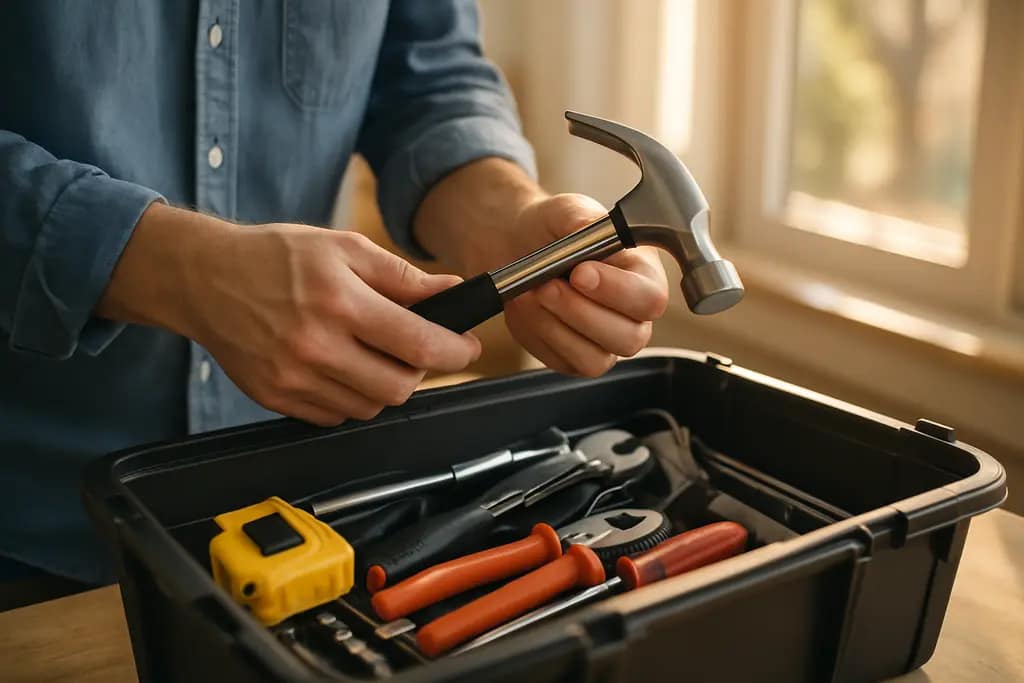
For many households, that points toward a small group of dependable basics: a tape measure, level, utility knife, stud finder, screwdrivers, pliers, adjustable wrench, drill or driver, paint supplies, and proper personal protective equipment where the task calls for it. The exact list should change with the home. A condo owner who mainly paints and mounts shelves may not need the same equipment as someone maintaining a detached home with a deck, garage, and yard.
Separate Starter Tools From Project-Specific Tools
Starter tools should support routine ownership tasks. Project-specific tools should be purchased or rented only when the scope is clear. A flooring cutter, tile saw, specialty sander, or heavy-duty demolition tool may make sense for a defined project, but buying these items before planning the work can tie up money that may be needed for materials, permits, disposal, or professional labor.
A cautious DIY Tool Selection process treats the tool as one cost within the full project, not as a stand-alone purchase. If the project may require licensed electrical, plumbing, gas, structural, roofing, or major mechanical work, the tool decision should come after confirming what work is safe and appropriate for the homeowner to perform. Buying a tool does not make a risky task suitable for DIY.
Match Tools To The Projects You Actually Do
Use Frequency As A Buying Test
The most practical buying test is frequency. If a tool will be used across several projects, ownership may be reasonable. If it will be used once, renting, borrowing through a formal tool library, or hiring the work out may be more financially disciplined. The purchase decision should account for blades, bits, batteries, chargers, replacement parts, storage, maintenance, and safe handling, not just the price tag on the tool.
This is where project planning helps protect the budget. Before buying, list the tasks the tool must perform, the materials involved, the working space, and the safety constraints. Homeowners who want a broader planning framework can review DIY renovation planning steps before committing money to equipment.
Think In Systems, Not Single Purchases
Power tools often work best as part of a system. If a homeowner buys cordless tools from one battery platform, future purchases may share batteries and chargers. That can reduce duplicate accessory costs, although the value depends on how often the tools are used and whether the platform includes the tools likely to be needed later.
Good DIY Tool Selection also means checking whether replacement parts, manuals, accessories, and batteries are available. A low-priced tool that cannot be serviced or supported may become more expensive if it fails during a project. For homeowners comparing categories and tool types, a related tool site in the same network, HighProTools, can be useful for organizing questions before purchase, but the final choice should still be matched to the job and the user’s skill level.
Budget For Ownership, Not Just Purchase Price
Tool Cost Sits Inside The Home Budget
Tool purchases compete with repairs, materials, contractor labor, insurance deductibles, and routine maintenance. Angi reported that homeowners spent an average of $12,050 on home projects in 2024, down from $13,667 in 2023, and that surprise expenses affected more than 50% of homeowners in its 2024 State of Home Spending Report. The same report found that 43% of homeowners reported increased stress tied to home repairs and maintenance.
Those numbers support a careful approach. Buying the cheapest available tool is not always the lowest-cost decision if it breaks, lacks safety features, or performs poorly enough to damage materials. Buying professional-grade equipment for occasional low-risk tasks may also be unnecessary. The right price point depends on expected use, consequences of failure, repairability, warranty terms, and whether the work can be done safely by the homeowner.
Estimate The Full Cost Before Checkout
A tool budget should include more than the main item. For a drill, that may mean bits, batteries, charger, case, and eye protection. For painting, it may mean rollers, brushes, trays, drop cloths, tape, sanding materials, cleanup supplies, and a safe step platform if needed. For dust-producing tasks, it may include appropriate masks or respirators based on the material and manufacturer instructions.
- How many projects will this tool realistically support in the next 12 to 24 months?
- Does the tool require accessories, batteries, blades, bits, or maintenance supplies?
- Is the task low-risk enough for DIY, or should a qualified professional handle it?
- Can the tool be stored safely away from children, moisture, and accidental use?
- Are manuals, replacement parts, and warranty support easy to find?
If the answers are unclear, delay the purchase until the project scope is better defined. A tool bought too early can encourage a homeowner to proceed with work that should have been redesigned, postponed, or assigned to a pro.
Keep Safety And Limits In The Decision

Do Not Let Tools Expand The Scope
Tools can create false confidence. A saw, grinder, nailer, sprayer, or rotary tool may look straightforward in a store or video, but real job sites involve dust, wiring, fasteners, load paths, uneven surfaces, moving blades, fumes, and awkward body positioning. Homeowners should read the manufacturer’s manual, use recommended protective equipment, and avoid disabling guards or safety switches.
DIY Tool Selection should also include a clear stop point. If a wall may contain electrical wiring or plumbing, if moisture damage is widespread, if a structure may be load-bearing, or if the project involves gas lines, service panels, roofing, or major plumbing changes, tool ownership is not the main issue. The safer decision is to pause and bring in a qualified professional.
Choose Tools That Reduce Error
Safer tools are not only about injury prevention. They can also reduce project errors. A reliable level, measuring tool, stud finder, torque control on a driver, stable work support, and appropriate clamps can help keep work controlled. These items rarely have the appeal of larger power tools, but they often prevent misaligned installations, stripped fasteners, damaged finishes, and wasted materials.
For homeowners, that matters because repair mistakes can become closing-era budget problems. A new owner may already be adjusting to mortgage payments, utility costs, furnishing needs, and initial maintenance. Avoidable tool-related damage can add stress at the same time cash reserves are most useful.
Make DIY Tool Selection Fit The House
Let The Property Set Priorities
A tool plan should fit the property type and the homeowner’s realistic role. A smaller home with painted interiors and basic maintenance needs may call for a restrained kit. An older property may justify better diagnostic and repair-support tools, but older homes can also carry higher risks from prior work, hidden defects, moisture, outdated materials, or unpermitted alterations. In those cases, inspection and professional judgment may matter more than buying more equipment.
Good DIY Tool Selection is not about owning the most tools. It is about owning tools that match common tasks, support safe work, fit the budget, and leave room for professional help when the project demands it. Homeowners should start with frequent, lower-risk needs; price the full project; check warranty and service support; and avoid using a purchase as a reason to take on work beyond their skill or legal scope.
The most useful tool collection grows slowly. Each purchase should answer a specific need in the home, reduce the chance of mistakes, and preserve cash for repairs that cannot wait. That approach is less exciting than filling a garage in one weekend, but it is better aligned with how homeowners actually maintain property over time.