

Let’s untangle the complex world of homebuyer aid. It’s not about magic or dreams. It’s about a real financial tool that’s easy to miss.
Imagine it as a financial guide for the tough journey of buying a home. The path is long, with over 2,000 programs across the country. A huge 75% of them aim to fill a big financial gap.
The old idea that this aid is only for the very poor is wrong. It’s for teachers, nurses, and government workers. It’s also for the first-time buyer who dreams of owning a home but feels stuck.
These programs are smart investments, often in the form of silent second mortgages or first-time buyer grants. Groups like TSAHC show how it works. They create clear paths where there seemed to be none before.
Federal vs state programs
Knowing the difference between federal and state housing assistance is like knowing when to call the Pentagon versus your city hall. The federal government makes big policy decisions. State and local governments handle the details to get you a home.
The federal government works like a broad-strokes painter. It sets rules for mortgages with FHA, VA, and USDA. These programs are the foundation.
But, the feds don’t always give you money for a down payment. That’s where state and local programs come in. They help you get the funds you need.
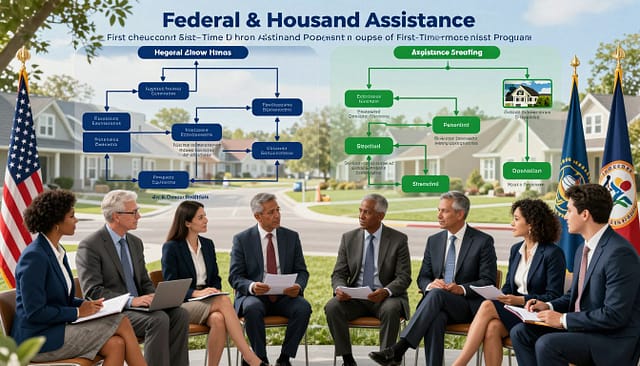
Take the GSFA Platinum program as an example. It adds help on top of federal loans. It works with FHA, VA, USDA, and Conventional mortgages. You can get help for single-family homes, condos, and even manufactured homes.
Think of it like this: the federal program approves your mortgage. The state program might give you money for closing costs. It’s a beautiful dance of bureaucracy.
The Housing Choice Voucher program helps low-income buyers. Government agencies even sell real estate and federal lands at low prices.
The hierarchy is important. Federal programs set the rules. State and local programs provide the funds. Missing this is like using a map of the interstate to find a side street.
Want to see how these layers work together? Our complete guide to down payment assistance explains the partnership.
Your strategy should be two-pronged. First, get your federal mortgage approved. Then, look for state and local help for your down payment. It’s not an either-or choice. It’s a “yes, and” proposition.
State programs like GSFA Platinum don’t replace federal backing. They add to it. This layered approach is the secret to modern housing assistance. The feds provide the canvas. Your state adds the paint.
Income and location limits
Income and location limits are not just rules. They decide if you can buy a home or not. It’s like a club where some get in easily, while others are turned away.
For first-time buyer grants, income limits vary. They’re based on your Area Median Income (AMI). This means you might qualify if you earn up to 120% of AMI, which is middle-class in many places. Your family size also matters.

Where you live is also key. For example, the GSFA Platinum program is only for California. You can’t use it in Colorado or Connecticut. This helps solve local housing problems, not national ones.
What can you buy with these funds? You can get homes, condos, townhomes, and manufactured homes. But, it must be your main home. No vacation homes or rental properties allowed. The goal is to help people live in homes, not to make money.
Why does one person get thousands in assistance while another doesn’t? It’s because of where you live and what you buy. For more affordable mortgage options, check out different programs.
Before you get excited about first-time buyer grants, prepare your tax return and a map. Compare your income to your local AMI. Then see if your dream neighborhood is in the program’s area. This is not just fine print. It’s the basic rule of who gets help and who doesn’t.
Application process
Applying for down payment assistance is like building a financial team. You’re not alone; you have allies who know the ropes. They help you navigate the process.
Finding a Participating Lender is the first step. These experts guide you through programs like Georgia’s GSFA Platinum. They explain the rules, rates, and fees in a way you can understand.
When you talk to a lender, be strategic. Ask if they’re certified for state programs. This helps you find the right expert for your needs.
Lenders bundle the down payment assistance with your mortgage. This makes the process smoother. It’s a win-win for both you and the lender.
The process usually goes like this:
- Discovery Phase: Look for programs you might qualify for based on income and location
- Lender Vetting: Talk to several lenders about their experience with specific programs
- Pre-approval Dance: Get pre-approved for both the mortgage and the DPA at the same time
- Document Assembly: Share your income, credit reports, and property details with your lender
- Program Submission: Your lender sends the complete package to the program administrator
Check out this step-by-step guide to applying for down payment assistance. It’s detailed and helpful.
Being patient is key. Down payment packages take longer than regular mortgages. This is because of all the approvals needed.
Start early. Talk to lenders before you look for houses. Get your documents ready for an audit. This overview of national and local assistance will help you prepare.
Remember, the application for housing assistance is part of your mortgage application. Your lender is your partner in building your financial future. Choose them wisely.
Common misconceptions
Let’s debunk myths about housing assistance. The internet is full of wrong information, and this topic is no exception.
The “free money” myth is a big one. It’s not like winning the lottery. Programs like GSFA’s Assist-to-Own offer a mix of gift and silent second mortgage. You might not pay monthly, but selling or refinancing means repaying the loan part. Always read the fine print.
Another myth is that only first-time buyers get help. But, Down Payment Resource data shows over 39% of programs help repeat buyers. If you haven’t owned a home in three years, you’re likely eligible again.
Some worry about being stuck in a property. But, GSFA, for example, doesn’t require a minimum stay. Just remember, that silent second mortgage comes back when you sell.
Lastly, the idea that any property can get government help is a myth. Housing assistance is for primary residences only. The dream of buying a beachfront rental with government help is just that—a dream.
Clearing these misconceptions is your last step. Understanding housing assistance turns anxiety into action. Now you know the truth.